 Skip to content

Ordering a drink with friends in a busy city bar can seem harmless until you realize how those choices may disrupt your weight loss goals. For many urban adults, alcohol adds unexpected calories and interferes with how the body burns fat. From hidden sugars in cocktails to alcohol’s unique effect on metabolism, understanding these factors empowers you to shape smarter habits. Discover how empty calories from drinks and altered fat-burning can impact your results and find practical ways to balance social life with healthy progress.
Table of Contents
- Alcohol And Weight Loss Explained
- How Alcohol Affects Metabolism
- Calorie Counts And Hidden Sugars In Alcohol
- Alcohol’s Impact On Fat Burning And Hunger
- Managing Alcohol While Losing Weight
Key Takeaways
| Point | Details |
|---|---|
| Alcohol Adds Empty Calories | Alcohol provides calories without nutritional value, contributing significantly to total calorie intake and hindering weight loss without fulfilling hunger. |
| Metabolism Disruption | Alcohol prioritizes its breakdown over fat burning, leading to increased fat storage and lower calorie burning, potentially lasting hours after drinking. |
| Increased Appetite | Drinking alcohol can impair judgment and increase appetite, leading to higher food consumption and failure to compensate for extra calories consumed. |
| Strategic Consumption | To mitigate weight loss setbacks, track alcohol intake like food, choose lower-calorie options, and plan drinking occasions mindfully. |
Alcohol and Weight Loss Explained
When you drink alcohol, your body treats it differently than food or water. Alcohol contains what scientists call empty calories because it provides energy (7 calories per gram) without nutritional value like vitamins, minerals, or protein. This matters for weight loss because those calories still count toward your daily total, yet they don’t satisfy hunger or support your body’s functions. A standard beer has around 150 calories, a glass of wine contains roughly 120 calories, and cocktails often exceed 200 calories depending on mixers. If you’re consuming these regularly without adjusting your other meals, you’re adding significant calorie intake that can derail progress.
Beyond the calorie issue, alcohol disrupts your metabolism in ways that make weight loss harder. When you drink, your body prioritizes breaking down alcohol over other nutrients, which means fat-burning slows down temporarily. Alcohol’s effects on your body include interference with hormone production and nutrient absorption, particularly affecting your endocrine system. Heavy or frequent drinking can trigger insulin resistance and metabolic syndrome, conditions that make it significantly harder to lose weight regardless of how many calories you consume. Research shows that the pattern of drinking matters more than you might think. A 2019 study found that binge drinking in single sittings posed a greater obesity risk than spreading moderate amounts throughout the week, especially for women. One night of heavy drinking can spike your calorie intake dramatically while also increasing hunger hormones like ghrelin the next day.
Alcohol also interferes with decision making around food choices. After drinking, your impulse control weakens, making you more likely to reach for high calorie snacks or larger portions than you normally would. This combination of empty calories, metabolic disruption, and impaired judgment creates a perfect storm for weight loss setbacks. If weight loss is your goal, you don’t necessarily need to eliminate alcohol completely, but understanding these mechanisms helps you make informed choices about when and how much you drink.
Pro tip: If you choose to drink, track alcohol calories in your app just like food, plan for them within your daily total, and opt for lower calorie options like light beer, wine, or spirits with sugar-free mixers to minimize metabolic disruption.
How Alcohol Affects Metabolism
Your liver is essentially your body’s processing plant, and when alcohol enters your system, it becomes the priority project. The moment you take a drink, your liver shifts into overdrive to break down alcohol using specific enzymes called alcohol dehydrogenase and aldehyde dehydrogenase. This enzymatic breakdown produces a compound called NADH, which fundamentally changes how your body processes energy. Think of it like this: your liver can only process one job at a time, and alcohol always cuts in line. While your body focuses on eliminating the alcohol, everything else takes a backseat, including fat burning. This means the fat you consumed with your drink or the fat already stored in your body stays put rather than being oxidized for energy.
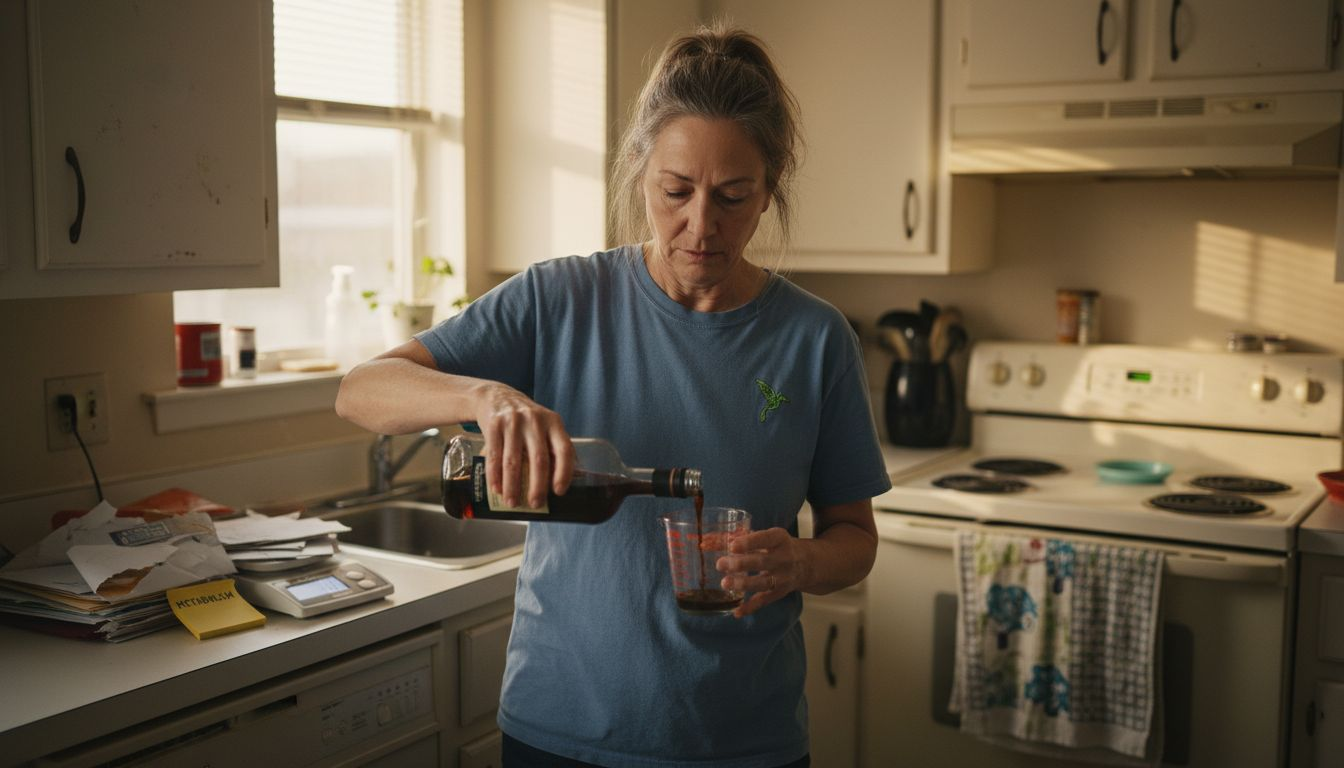
The metabolic disruption goes deeper than just prioritization. When alcohol breaks down in your liver, it creates an imbalance in your cellular chemistry that actively inhibits fat oxidation. Ethanol metabolism alters cellular redox states, meaning the ratio of molecules involved in energy production gets thrown off. This disruption is particularly problematic because it also suppresses gluconeogenesis, the process your body uses to produce glucose and maintain stable blood sugar. Additionally, your metabolic rate can temporarily decrease because your body is expending energy on alcohol processing rather than optimizing how it burns calories. Variations in how quickly individuals metabolize alcohol depend on factors like genetics, liver health, body composition, and even your gender, which explains why two people can have completely different responses to the same drink.
Here’s what makes this especially relevant for weight loss: the metabolic disruption doesn’t end when you stop drinking. Your body can take hours to fully recover its normal metabolic state, meaning a night of drinking can impact your fat burning ability well into the next day. During this recovery period, your body accumulates fat more readily, and your appetite hormones become dysregulated. If you’re tracking your weight loss progress, understanding that alcohol creates a metabolic penalty beyond just its calorie content helps explain why some weeks show slower progress despite staying under your calorie target.
Pro tip: Space out drinking occasions rather than clustering them, allowing your metabolism time to recover between events, and pair any alcohol consumption with protein and healthy fats to slow absorption and minimize metabolic disruption.
Calorie Counts and Hidden Sugars in Alcohol
When you order a drink at a bar or grab one from your fridge, you’re not just getting alcohol. Most beverages contain a cocktail of added sugars, syrups, and ingredients that transform what might seem like a simple drink into a calorie bomb. A typical margarita can contain 250 to 300 calories before you even account for the tequila, while a cosmopolitan easily hits 200 calories. Beer isn’t innocent either. A regular 12-ounce beer contains around 150 calories, but some craft beers and IPAs push toward 250 calories per serving. The real problem isn’t just the volume of calories, but what those calories actually represent. Alcohol provides calories without essential nutrients, meaning your body gets energy it must process while receiving nothing that supports your health, hormone function, or muscle recovery.
The hidden sugars in many alcoholic drinks are where things get particularly tricky. A standard daiquiri contains roughly 29 grams of sugar, a piña colada has around 32 grams, and even seemingly light drinks like flavored seltzers can contain 2 to 5 grams of added sugar per serving. Wine presents another surprise: a glass of sweet wine can contain 4 to 12 grams of sugar, while dry wines contain significantly less. These sugars spike your blood glucose rapidly, triggering insulin release and making your body more likely to store energy as fat rather than burn it. Beers vary dramatically depending on type and brand. Light beers typically contain 3 to 7 grams of carbohydrates, while standard beers contain 10 to 13 grams, and sweet stouts can exceed 20 grams. When you consume multiple drinks in one sitting, you’re potentially adding 30, 40, or even 50 grams of sugar to your system in a single evening.
What makes this metabolically damaging is the sequence of events. Your body processes alcohol before other nutrients, which means those sugars get metabolized differently than if you consumed them in food. Without the fiber, protein, and fat that typically accompany sugar in whole foods, your body absorbs these sugars rapidly and stores excess energy efficiently as fat. The calorie density of alcohol (7 calories per gram) combined with added sugars creates a situation where you’re consuming substantially more energy than you realize. Many people accurately count the alcohol calories but completely miss the sugars hiding in mixers and the drink itself. This gap between perceived and actual calorie intake is one reason why regular drinkers often plateau in their weight loss efforts despite thinking they’re on track.
Pro tip: Choose drinks made with sugar-free mixers, opt for spirits with zero-calorie sodas or unsweetened beverages, or use a sugar intake calculator to track hidden sugars in your drinks and adjust your daily intake accordingly.
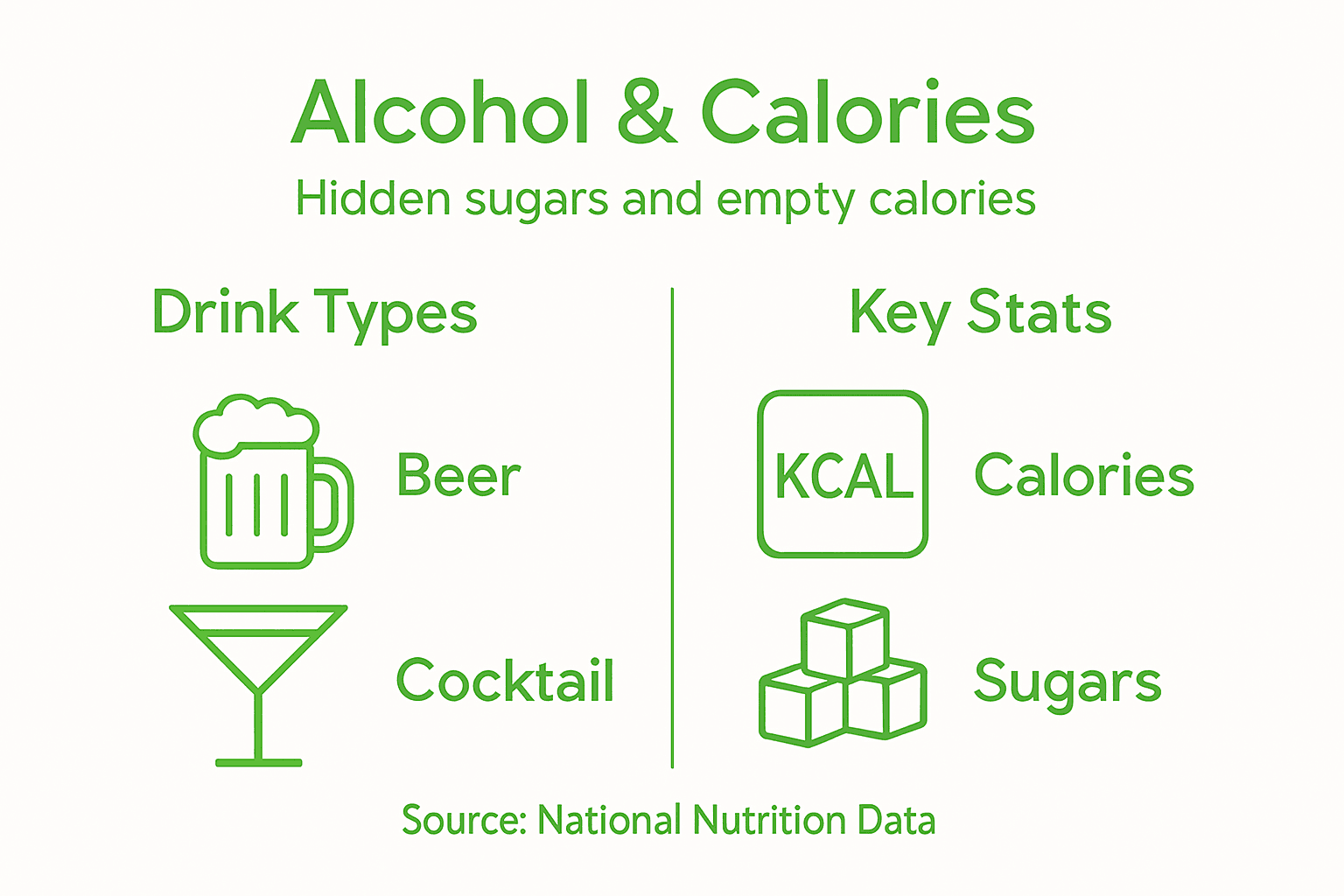
Here’s a comparison of common alcoholic drinks by calorie and sugar content:
| Drink Type | Typical Calories (per serving) | Typical Sugar Content (grams) | Notes |
|---|---|---|---|
| Regular Beer | 150 | 10-13 | Higher for some craft beers |
| Light Beer | 100 | 3-7 | Lower calorie option |
| Glass of Wine | 120 | 1-12 | Dry wines much lower |
| Sweet Cocktail | 200-300 | 20-35 | Includes syrups/mixers |
| Straight Spirits | 65-100 | 0 | No added sugar |
| Flavored Seltzer | 90-110 | 2-5 | Check brand for details |
Alcohol’s Impact on Fat Burning and Hunger
Your body has a complicated relationship with alcohol when it comes to burning fat. When you consume alcohol, your body immediately shifts into preservation mode rather than fat-burning mode. The reason is simple but powerful: alcohol is a toxin that your body wants to eliminate as quickly as possible. This means your liver prioritizes breaking down alcohol over accessing your fat stores for energy. During the hours when alcohol is being processed, your fat-burning machinery essentially shuts down. Your body can burn roughly 90 percent less fat when alcohol is present in your system. This isn’t a minor inconvenience for weight loss. If you typically burn 300 calories from fat oxidation in a day, add alcohol into the equation and you might only burn 30 calories from fat. Over weeks and months, this compounds into significant weight loss stalls.
The hunger side of the equation makes things worse. Alcohol consumption increases food energy intake due to impaired satiety signals and increased appetite that doesn’t get compensated for later. When alcohol raises your serotonin levels temporarily, it creates a false sense of reward that mimics hunger. Your brain interprets this as a signal to eat more, and because alcohol also lowers your inhibitions, you’re more likely to act on those impulses. You end up ordering appetizers you wouldn’t normally eat, choosing larger portions, or reaching for foods you’d typically avoid. The craving doesn’t feel like a choice in the moment. It feels genuine and urgent. Many people underestimate how much extra food they consume when drinking, assuming they’re only adding the drink’s calories when they’re actually adding the drink plus 200 to 400 extra calories in food.
What makes this pattern particularly damaging is the lack of compensation. Your body doesn’t say, “You had 300 extra calories from your margarita and appetizers, so tomorrow eat 300 calories less.” The extra calories stick around. Research shows that alcohol drinkers fail to reduce food intake later to offset the additional energy consumed during drinking occasions. This creates a cumulative calorie surplus that directly undermines weight loss progress. Additionally, fat that would normally get burned gets stored instead, often around your midsection where alcohol preferentially deposits fat. The combination of reduced fat burning and increased food intake creates a scenario where you’re moving away from your weight loss goal in two directions simultaneously. Understanding this mechanism helps explain why some people seem to gain weight disproportionately when they add regular drinking to their routine.
Pro tip: Eat a balanced meal with protein and healthy fats before drinking to slow alcohol absorption and enhance satiety, which helps you eat less during and after drinking occasions.
Below is a summary of key ways alcohol impedes weight loss:
| Mechanism | Impact on Weight Loss | Lasting Effect |
|---|---|---|
| Metabolic Prioritization | Body burns less fat while processing alcohol | Can last several hours |
| Increased Appetite | Makes you eat more after drinking | Extra calories rarely offset |
| Insulin Resistance | Reduced ability to process carbs and fat | Greater long-term risk |
| Impaired Judgment | Poorer food choices during/after drinking | Higher risk of overeating |
Managing Alcohol While Losing Weight
The good news is that you don’t have to choose between weight loss and drinking. You can do both, but it requires intentional strategy and honest self assessment. The key starts with understanding your current alcohol consumption and then making deliberate adjustments. Many people think moderation means having one drink per night, but that’s not quite how it works for weight loss. Moderation means limiting frequency and quantity rather than spacing drinks throughout the week. Someone losing weight successfully might have two drinks on a Friday night and then skip alcohol entirely for five days, rather than one drink daily. This approach allows your metabolism to recover and your body to burn fat between drinking occasions.
The most practical strategy is to track your alcohol intake like food by counting its calories within your daily total. This sounds simple, but it changes how you think about drinks. When you account for a 250 calorie margarita, you might realize you need to reduce your dinner portion or eliminate a snack to stay within your target. You become intentional rather than reactive. Beyond calorie counting, choose lower calorie beverages strategically. Light beers contain roughly 100 calories per 12 ounces versus 150 for regular beer. Dry wines have fewer calories than sweet varieties. Spirits mixed with zero-calorie sodas eliminate the hidden sugar problem entirely. The order of drinks matters too. Start with water, alternate between alcoholic and non-alcoholic beverages, and eat a balanced meal with protein and fat before drinking to slow alcohol absorption and reduce subsequent hunger.
Build habits that support your weight loss rather than sabotage it. Avoid keeping alcohol readily available at home where you might drink mindlessly. Set specific drinking goals in advance, like deciding you’ll have alcohol only on weekends or limiting yourself to two drinks per occasion. Effective management strategies include having alcohol-free days and replacing alcoholic drinks with water or other zero-calorie beverages. Track not just the alcohol but also the food you consume while drinking, as this is often where hidden calories accumulate. Recognize that drinking impairs your judgment, so plan your food choices before you start drinking. If you eat healthy snacks beforehand, you’re less likely to order unhealthy appetizers later. Consider whether your current drinking frequency aligns with your weight loss timeline. If you’re trying to lose 20 pounds in three months, frequent drinking will slow your progress. If you have a longer timeframe and can maintain a moderate deficit, occasional drinking fits more easily into the plan.
Pro tip: Set a weekly alcohol budget measured in drinks or calories, track it visually so you can see what you have remaining, and plan drinking occasions in advance rather than deciding impulsively throughout the week.
Take Control of Your Weight Loss with Smarter Alcohol Choices
Understanding how alcohol disrupts metabolism and increases hidden calorie intake is the first step to overcoming common weight loss barriers. This article highlights key challenges like metabolic prioritization that slows fat burning and increased appetite that leads to overeating. If you’ve been frustrated by stalled progress despite calorie counting, you are not alone. Alcohol calories and sugars can silently sabotage your efforts.
At Dietium.com, we provide more than just insights. Our advanced AI-powered tools available in the Recipians app help you track those elusive alcohol calories alongside your meals and snacks. With personalized meal plans designed to support your goals and balance your nutrition, you can still enjoy social drinks without compromising progress. Our platform empowers you to make evidence-based choices by factoring in alcohol’s metabolic impact, hidden sugars, and real-time calorie budgeting.
Don’t let drinking derail your journey. Visit Dietium.com today to start tracking smarter, plan better, and reclaim control over your weight loss. Ready to break the cycle and achieve lasting results? Explore how our tailored recommendations can fit your lifestyle and fuel your success now.
Frequently Asked Questions
How does alcohol affect weight loss?
Alcohol contains empty calories that contribute to your daily total without providing nutritional value. It also disrupts metabolism, slowing down fat burning and increasing appetite, which can hinder weight loss efforts.
Can I still drink alcohol while trying to lose weight?
Yes, you can drink alcohol while losing weight, but it requires moderation and intentional calorie tracking. Opt for lower-calorie options and be mindful of the extra calories from food consumed while drinking.
What types of alcoholic drinks are better for weight loss?
Lower-calorie options like light beers, dry wines, and spirits mixed with sugar-free mixers are better choices for weight loss, as they provide fewer empty calories compared to cocktails and sweet drinks.
How does alcohol consumption impact appetite and food choices?
Alcohol can increase appetite and lower inhibitions, often leading to poorer food choices and overeating. This effect can result in consuming more calories than you realize during drinking occasions.


