 Skip to content

Most american millennials and Gen Zers know that processed foods dominate supermarket shelves, but fewer realize that shifting to a whole food vegan diet can cut the risk of heart disease by nearly 32 percent. This approach matters for anyone seeking tangible health improvements and sustainable eating habits. If you want practical tips and your own meal plans for building a nutrient-rich lifestyle from unprocessed plants, you will find real strategies and clarity right here.
Table of Contents
- Whole Food Vegan Diet Explained Clearly
- Comparing Whole Food Vegan and Plant-Based Diets
- Health Benefits Backed by Science
- Key Nutrients and How to Get Them
- Practical Meal Planning and Common Challenges
Key Takeaways
| Point | Details |
|---|---|
| Whole Food Vegan Diet Principles | Focus on consuming unprocessed, nutrient-dense plant foods while eliminating all animal products and processed alternatives. |
| Health Benefits | Scientific research shows significant reductions in cardiovascular disease risk, improved blood sugar control, and potential protection against certain cancers. |
| Nutrient Attention | Key nutrients such as Vitamin B12, iron, and omega-3 fatty acids require careful planning and may need supplementation. |
| Meal Planning Strategies | Overcome common challenges by batch cooking, diversifying meal variety, and preparing grab-and-go options to ensure a successful transition to the diet. |
Whole Food Vegan Diet Explained Clearly
A whole food vegan diet represents a comprehensive nutritional approach that goes far beyond traditional dietary restrictions. Whole plant-based eating focuses on consuming unprocessed, nutrient-dense foods derived exclusively from plant sources, eliminating all animal products and highly processed alternatives.
At its core, this diet emphasizes consuming foods in their most natural state: fresh fruits, vegetables, whole grains, legumes, nuts, and seeds. Unlike standard vegan diets that might include processed meat substitutes or refined products, whole food vegan nutrition prioritizes minimally transformed ingredients. Vegan nutrition centers on obtaining protein, vitamins, and minerals directly from plant sources, ensuring a clean and wholesome approach to eating.
The fundamental principles of whole food vegan eating include:
- Consuming fruits and vegetables in their complete, unrefined form
- Choosing whole grains over processed alternatives
- Selecting legumes and beans as primary protein sources
- Avoiding refined sugars, oils, and processed vegan convenience foods
- Focusing on nutrient density and minimally processed ingredients
Pro tip: Start your whole food vegan journey by gradually replacing processed foods with whole plant alternatives, focusing on learning simple, nutritious recipes that make the transition enjoyable and sustainable.
Comparing Whole Food Vegan and Plant-Based Diets
While whole food vegan and plant-based diets might seem similar at first glance, they represent distinct nutritional approaches with unique philosophical and practical differences. Dietary philosophies vary significantly in their core motivations and implementation strategies, making understanding their nuances crucial for individuals seeking intentional nutrition.
Whole food vegan diets are strictly defined by complete animal product elimination and a commitment to minimally processed plant-based foods. This approach prioritizes consuming whole, unrefined ingredients while maintaining a strict ethical stance against animal exploitation. Plant-based diets, in contrast, offer more dietary flexibility, potentially allowing small amounts of animal products and focusing primarily on health optimization rather than comprehensive ethical considerations.
Key distinctions between these dietary approaches include:
Here’s how the whole food vegan and plant-based diets differ in practice:
| Aspect | Whole Food Vegan Diet | Plant-Based Diet |
|---|---|---|
| Animal Product Policy | Excludes all animal-derived foods | May allow small amounts occasionally |
| Processed Food Intake | Avoids refined and processed foods | May include some processed options |
| Main Motivation | Ethics and environmental impact | Personal health and well-being |
| Ingredient Focus | Emphasizes whole, natural plants | Focuses on plant foods, not purity |
| Dietary Flexibility | Strict and rule-based | Flexible and individualized |
- Whole food vegan diets completely eliminate all animal products
- Plant-based diets may include occasional animal-derived foods
- Whole food vegan diets are often motivated by ethical and environmental concerns
- Plant-based diets typically prioritize personal health and nutritional balance
- Whole food vegan nutrition emphasizes strict ingredient purity and minimal processing
Pro tip: Experiment with both dietary approaches to discover which nutritional philosophy best aligns with your personal health goals, ethical beliefs, and lifestyle preferences.
Health Benefits Backed by Science
Nutritional science has increasingly validated the remarkable health advantages of whole food vegan diets. Comprehensive medical research analyzing nearly 50 studies demonstrates significant positive impacts on critical health markers, revealing substantial improvements in cardiovascular wellness, metabolic function, and disease prevention.
Clinical investigations consistently show that plant-based dietary approaches can dramatically reduce risks associated with chronic diseases. Scientific evidence from multiple research studies indicates that whole food vegan diets contribute to lower blood pressure, improved blood sugar control, reduced body mass index, and decreased likelihood of developing serious health conditions like ischemic heart disease and certain cancers.
Key scientifically documented health benefits include:
- Significant reduction in cardiovascular disease risk
- Improved blood sugar management and insulin sensitivity
- Lower blood pressure and cholesterol levels
- Decreased risk of type 2 diabetes
- Potential protection against certain cancer types
- Enhanced metabolic health and weight management
- Reduced inflammation markers
Pro tip: Consult with a registered dietitian to develop a comprehensive whole food vegan nutrition plan that addresses your specific health needs and ensures complete nutritional balance.
Key Nutrients and How to Get Them
Nutrient planning is crucial for maintaining optimal health on a whole food vegan diet. Comprehensive nutritional guidelines emphasize the importance of strategic dietary choices to ensure complete nutritional coverage across critical micronutrients that are often challenging to obtain from plant-based sources.
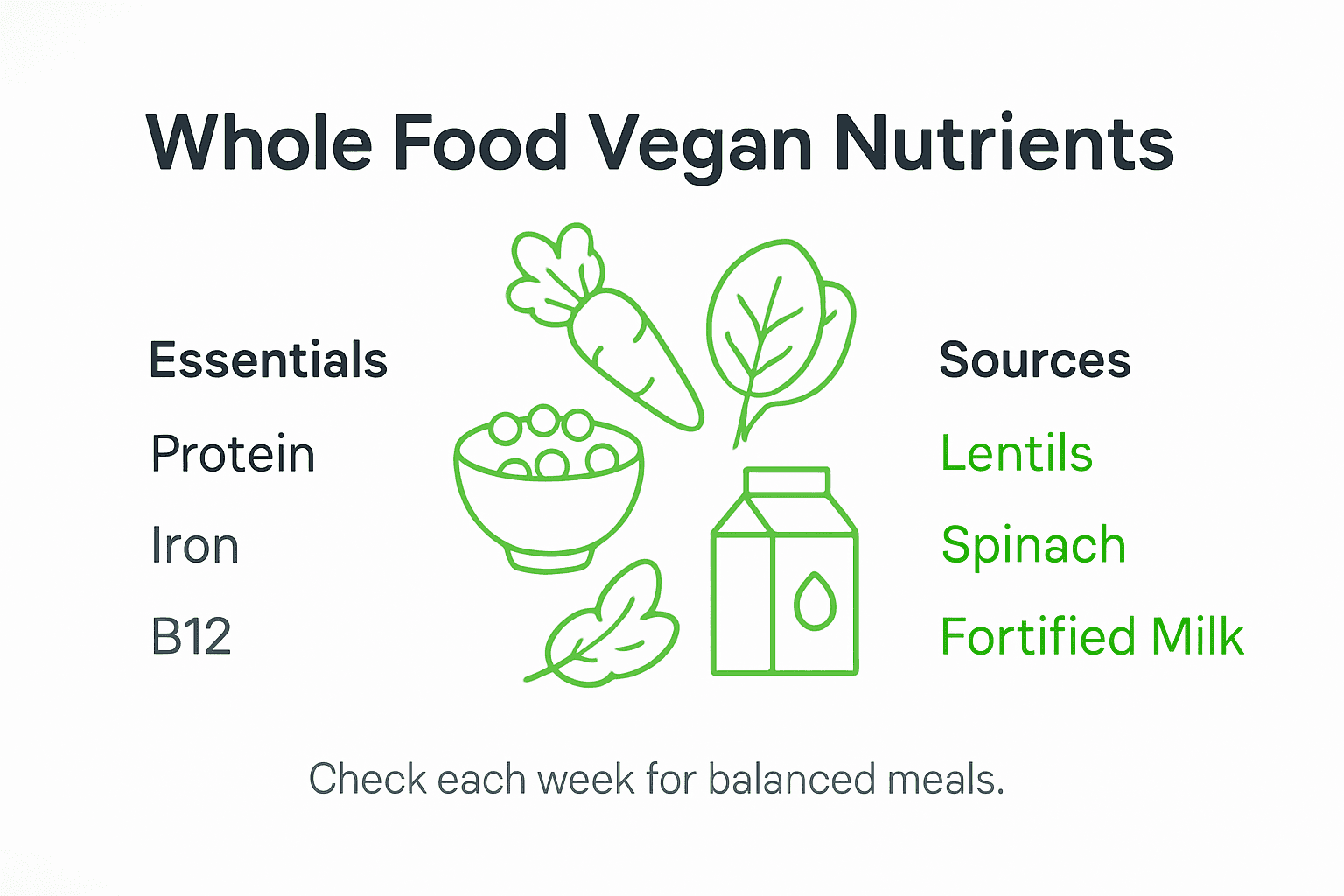
Vital nutrients require targeted nutritional strategies for whole food vegan dieters. Key nutrients demanding special attention include vitamin B12, calcium, vitamin D, iron, iodine, and omega-3 fatty acids. Plant-based sources like fortified plant milks, nutritional yeast, seaweed, nuts, seeds, and dark leafy greens can provide essential micronutrients, though supplementation might be necessary to meet recommended daily requirements.
Key nutrients and their optimal plant-based sources include:
- Vitamin B12: Nutritional yeast, fortified plant milks, B12 supplements
- Calcium: Tofu, sesame seeds, fortified breads, dark leafy greens
- Vitamin D: Fortified plant milks, mushroom, sunlight exposure
- Iron: Lentils, spinach, quinoa, pumpkin seeds
- Omega-3 Fatty Acids: Chia seeds, flaxseeds, walnuts, algae-based supplements
- Iodine: Seaweed, iodized salt
- Zinc: Pumpkin seeds, hemp seeds, legumes
Pro tip: Consult a registered dietitian to develop a personalized nutrition plan that addresses your specific micronutrient needs and ensures comprehensive dietary balance.
Practical Meal Planning and Common Challenges
Successfully transitioning to a whole food vegan diet requires strategic planning and understanding potential hurdles. Meal planning strategies can transform the seemingly complex journey into a manageable and enjoyable lifestyle change, helping individuals navigate nutritional needs and culinary diversity.

Common challenges for whole food vegan dieters include protein intake, meal variety, social dining, and ensuring comprehensive nutrient coverage. Time constraints and limited cooking skills can also create obstacles, making advanced preparation and simple, nutritious recipe development crucial. Developing a systematic approach to meal preparation helps mitigate these challenges and supports long-term dietary success.
The following table summarizes potential obstacles and effective solutions for whole food vegan dieters:
| Challenge | Example Scenario | Practical Solution |
|---|---|---|
| Low Protein Intake | Struggling to meet daily needs | Add legumes and seeds to meals |
| Limited Meal Variety | Eating repetitive dishes | Try global plant-based recipes |
| Social Situations | Dining out with friends | Research menus in advance |
| Nutrient Gaps | Lack of vitamin B12 or iron | Use fortified foods or supplements |
| Time Constraints | Not enough cooking time | Batch cook grains and beans |
Key strategies for overcoming whole food vegan diet challenges include:
- Batch cooking staple ingredients like grains and legumes
- Creating a weekly meal rotation with diverse recipes
- Investing in versatile kitchen equipment
- Learning quick, nutritious cooking techniques
- Developing a comprehensive pantry of plant-based staples
- Preparing grab-and-go meal options
- Exploring international plant-based cuisines for inspiration
Pro tip: Dedicate two hours each weekend to meal prepping and planning to ensure a smooth, stress-free approach to whole food vegan nutrition throughout the week.
Take Control of Your Whole Food Vegan Journey with Personalized Support
Transitioning to a whole food vegan diet brings incredible health benefits but also unique challenges like ensuring nutrient balance and maintaining meal variety. If you’re focused on nutrient density, minimally processed ingredients, and overcoming common obstacles such as protein intake or meal planning, you are not alone. Many find it difficult to consistently meet their dietary goals without tailored guidance and flexible meal options.
At Dietium, we understand these challenges and offer powerful, AI-driven solutions to help you succeed. Our Recipians app delivers personalized meal plans and recipe suggestions crafted to your whole food vegan lifestyle. You can track your calorie needs, body metrics, and nutritional intake easily, ensuring you get key nutrients like vitamin B12, iron, and omega-3 fatty acids. Plus, with video consultations and seamless device integration, your health journey becomes more convenient and motivating.
Start optimizing your whole food vegan diet today by exploring our custom meal planning tools designed to help you enjoy diverse, balanced meals without stress. Visit Dietium now and discover how data-driven nutrition and real-time support can transform your health and wellness journey.
Frequently Asked Questions
What are the primary components of a whole food vegan diet?
A whole food vegan diet focuses on consuming whole, unprocessed plant-based foods, including fresh fruits, vegetables, whole grains, legumes, nuts, and seeds, while eliminating all animal products and highly processed alternatives.
How does a whole food vegan diet differ from a standard vegan diet?
Unlike a standard vegan diet that may include processed foods and meat substitutes, a whole food vegan diet emphasizes minimally processed, nutrient-dense ingredients, prioritizing whole foods over convenience items.
What health benefits are associated with a whole food vegan diet?
Research indicates significant health advantages from whole food vegan diets, including lower risk of cardiovascular disease, improved blood sugar management, reduced body mass index, and lower likelihood of developing conditions like type 2 diabetes and certain cancers.
What are some key nutrients to focus on in a whole food vegan diet?
Important nutrients to monitor include vitamin B12, calcium, vitamin D, iron, iodine, omega-3 fatty acids, and zinc. These nutrients can often be sourced from fortified foods, nuts, seeds, legumes, and dark leafy greens.


