 Skip to content

Over half of American adults report confusion about how much protein they really need each day. With so much conflicting advice online, it is easy to feel unsure about making the right choices for your body and lifestyle. Understanding your unique protein requirements is the first step to supporting muscle growth, managing weight, and feeling your best. Get clear guidance as you learn how to accurately calculate, plan, and track your daily protein for lasting results.
Table of Contents
- Step 1: Determine Your Daily Protein Needs
- Step 2: Choose Protein Sources That Fit Your Lifestyle
- Step 3: Plan Meals Using Accurate Portion Sizes
- Step 4: Track Intake With Smart Tools and Apps
- Step 5: Adjust Habits and Verify Progress Regularly
Quick Summary
| Essential Insight | Clarification |
|---|---|
| 1. Determine Your Protein Needs | Calculate daily protein requirements based on weight, activity level, and health goals. Aim for 0.8-2.0 grams per kilogram of body weight. |
| 2. Choose Diverse Protein Sources | Select protein sources that fit dietary preferences, ensuring a complete amino acid profile. Include plant, animal, and dairy proteins. |
| 3. Measure Portion Sizes Carefully | Aim for 3-4 ounces of protein per meal, or half a cup for plant-based proteins. Use kitchen tools to ensure accuracy. |
| 4. Track Protein Intake with Apps | Utilize nutrition tracking apps like MyFitnessPal to log protein consumption. Setting daily goals can help maintain accountability. |
| 5. Regularly Review and Adjust Intake | Schedule monthly check-ins to assess protein intake and energy levels. Adjust based on performance, recovery, and overall health. |
Step 1: Determine Your Daily Protein Needs
Knowing exactly how much protein your body requires is crucial for achieving optimal health and fitness goals. Personalized protein requirements vary based on multiple individual factors, making a systematic approach essential for accurate nutritional planning.
To calculate your specific protein needs, you’ll want to consider several key metrics: your body weight, activity level, muscle building goals, and overall health status. Generally, most adults need between 0.8 to 1.2 grams of protein per kilogram of body weight daily. Athletes or individuals engaged in intense physical training might require up to 2.0 grams per kilogram. A comprehensive review of dietary protein intake highlights the importance of personalized assessments across different populations.
Quick calculation tip: Multiply your weight in pounds by 0.36 to get a baseline daily protein requirement. For example, a 150-pound person would aim for approximately 54 grams of protein per day. However, this is a general guideline – your specific needs might differ based on muscle mass, fitness goals, and overall health conditions. Always consult a nutritionist or healthcare professional for the most accurate personalized recommendation.
Step 2: Choose Protein Sources That Fit Your Lifestyle
Successfully meeting your protein goals requires selecting sources that align with your dietary preferences, health objectives, and personal lifestyle. Protein choices can be strategically tailored to individual dietary needs, ensuring you maintain nutritional balance while enjoying your meals.
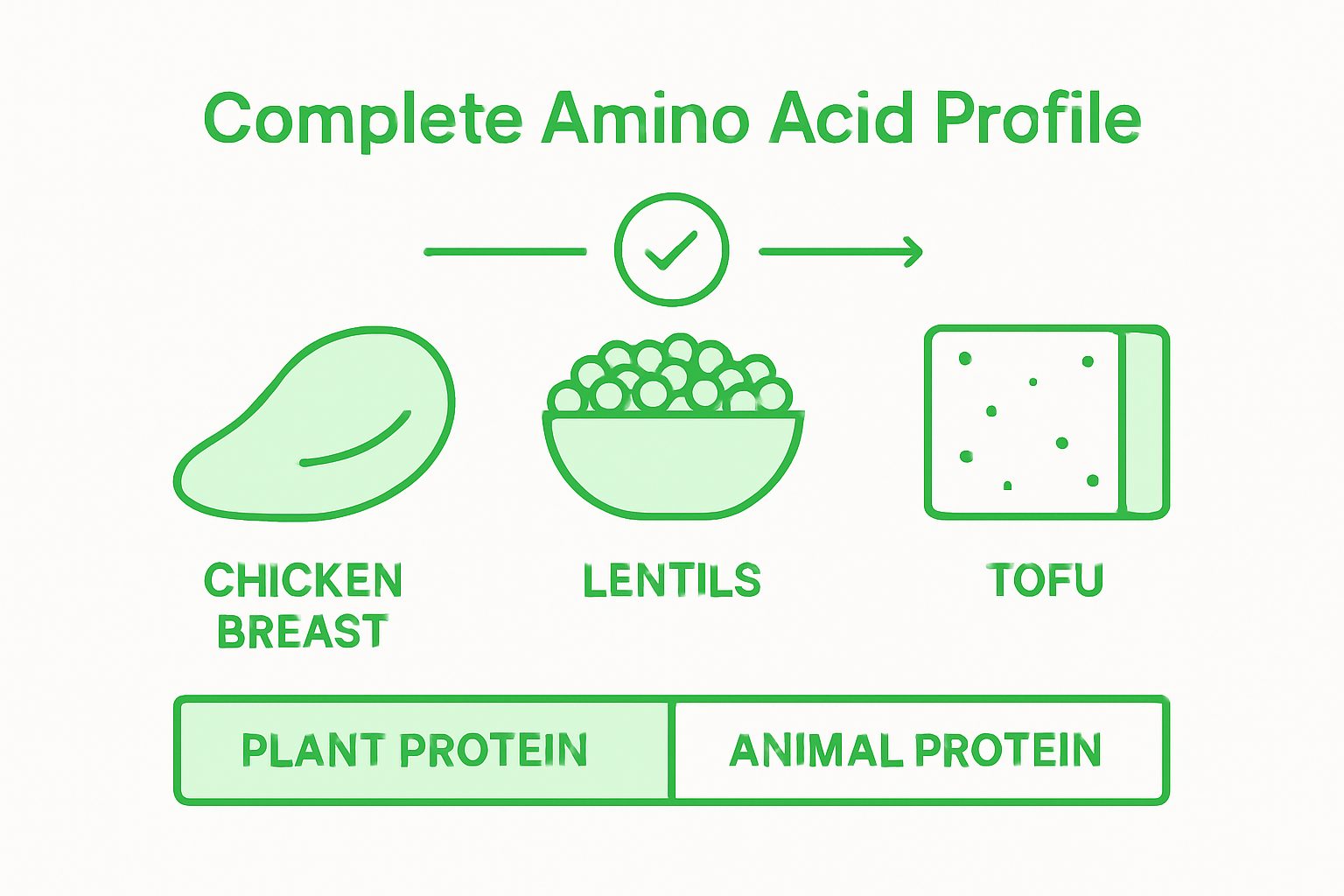
The American Heart Association recommends selecting healthy protein sources that prioritize plant-based options, fish, and lean meats. For meat eaters, excellent options include chicken breast, turkey, lean beef, and fish. Vegetarians can rely on eggs, Greek yogurt, cottage cheese, and protein-rich legumes like lentils and chickpeas. Vegans have fantastic plant protein alternatives such as tofu, tempeh, seitan, quinoa, and a variety of beans and nuts.
Pro tip: Diversify your protein sources to ensure you receive a complete amino acid profile. No single food provides all essential amino acids, so mixing protein types throughout your day can help you meet nutritional requirements. Consider creating meal plans that incorporate multiple protein sources, which not only keeps your diet interesting but also maximizes nutritional intake. Always listen to your body and adjust your protein sources based on how you feel and your specific health goals.
Step 3: Plan Meals Using Accurate Portion Sizes
Successfully meeting your protein goals requires strategic meal planning with precise portion sizes that align with your nutritional needs. Calculating protein needs and understanding appropriate food portions are crucial for achieving dietary objectives, enabling you to optimize your nutritional intake efficiently.

Protein requirements can vary significantly based on individual factors like body weight, activity level, and fitness goals. A general guideline is to aim for 3 to 4 ounces of protein per meal which translates to approximately the size of your palm. For chicken breast, this means a portion roughly equivalent to a deck of cards. For plant based proteins like legumes, a serving size is typically half a cup. Tracking your portions using kitchen scales or visual comparisons can help ensure you are consuming the right amount of protein without overeating.
Pro tip: Prepare your meals in advance and portion them out in individual containers. This not only helps you control protein intake but also saves time and reduces the likelihood of making impulsive food choices. Remember that consistency is key – small adjustments in portion sizes can make a significant difference in meeting your protein goals over time.
Step 4: Track Intake With Smart Tools and Apps
Tracking protein intake has become dramatically easier with technology that transforms nutritional monitoring from a tedious task to an engaging, personalized experience. Advanced recommendation systems now use sophisticated ensemble topic modeling to provide tailored dietary suggestions, making it simpler than ever to stay on top of your nutritional goals.
Comprehensive protein tracking tools can help you estimate daily intake by considering multiple factors like activity level and dietary preferences. Modern smartphone apps offer features like barcode scanning, meal logging, and automatic nutrient calculations. Popular options include MyFitnessPal, Cronometer, and LoseIt, which allow you to input meals, track macronutrients, and visualize your protein consumption in real time. Most apps provide detailed nutritional breakdowns, showing protein content per serving and helping you make informed dietary choices.
Pro tip: Choose an app with a large food database and easy logging interface. Set daily protein goals and use notifications to remind you to track meals. Consistency is key – the more accurately you log your intake, the better insights you will gain about your nutritional patterns. Consider syncing your app with fitness trackers for a more comprehensive view of your health and nutrition goals.
Step 5: Adjust Habits and Verify Progress Regularly
Systematic review of dietary protein intake reveals the critical importance of ongoing assessment and personalized nutritional adjustments. Progress tracking is not a onetime event but a continuous process of monitoring, analyzing, and fine tuning your protein intake to align with your evolving health and fitness objectives.
Regular evaluation of protein sources helps ensure your dietary choices support long term health goals. Start by scheduling monthly check ins with yourself where you assess your current protein intake, energy levels, workout performance, and overall well being. Look for patterns like muscle recovery speed, satiety levels, and body composition changes. If you are not seeing desired results, consider adjusting your protein sources, timing of protein consumption, or total daily intake. Some key indicators of successful protein intake include stable energy throughout the day, effective muscle recovery, consistent workout performance, and maintenance of lean muscle mass.
Pro tip: Create a simple progress tracking spreadsheet or use a dedicated fitness app to record monthly measurements like body weight, muscle mass, energy levels, and performance metrics. This data will help you make informed decisions about your protein intake strategy. Remember that your nutritional needs will change with age, activity level, and fitness goals, so stay flexible and willing to experiment with your approach.
Take Control of Your Protein Goals with Personalized Support
Meeting your protein needs naturally requires careful calculation, varied food choices, and consistent tracking. If you find it challenging to determine your exact daily protein requirement or struggle with meal planning and portion control, you are not alone. Many people face obstacles when trying to optimize their protein intake to support muscle recovery, sustained energy, and overall health as highlighted in the article.
At Dietium.com, we understand these challenges and offer tailored solutions through tools designed to simplify your journey. Our Recipians app provides custom meal plans with accurate portion sizes and diverse protein sources that fit your preferences. You can easily monitor your intake with smart calculators and logging features to track progress and adjust habits effectively. Don’t wait to transform your nutrition and see real results. Visit Dietium Recipians today and start building a protein-focused plan that works uniquely for you.
Frequently Asked Questions
How can I calculate my daily protein needs?
To calculate your daily protein needs, multiply your weight in pounds by 0.36 to get a baseline. For instance, if you weigh 150 pounds, you should aim for about 54 grams of protein each day. Adjust this figure based on your activity level and fitness goals.
What are some healthy protein sources I can include in my diet?
Incorporate a variety of protein sources such as lean meats like chicken and turkey, fish, eggs, Greek yogurt, legumes, and plant-based options like tofu and quinoa. Diversifying your protein sources ensures you get all essential amino acids, contributing to well-rounded nutrition.
How do I plan protein portions for my meals?
Aim for 3 to 4 ounces of protein per meal, which is roughly the size of your palm. For example, a serving of chicken breast should be about the size of a deck of cards, helping you meet your protein goals without overeating.
What tools can I use to track my protein intake?
Consider using smartphone apps that allow you to log meals, track your protein consumption, and visualize progress. Many apps have features like barcode scanning and nutritional breakdowns to help you monitor your intake effectively.
How often should I reassess my protein intake?
Schedule monthly check-ins to evaluate your protein intake and overall health. During this time, assess factors like energy levels and muscle recovery to determine if you need to make adjustments to your protein sources or intake.
What should I do if I’m not meeting my protein goals?
If you’re not achieving your protein goals, reassess your protein sources, portion sizes, and total intake. Consider making small adjustments, such as increasing your portion sizes by ~20%, to better meet your nutritional needs.
Recommended
- 8 Best Protein Sources for Vegans Explained Simply – Dietium
- Protein Intake for Weight Loss: Simple Guide for Success – Dietium
- Understanding Nutrition for Muscle Gain and Growth – Dietium
- 7 Smart High Protein Snacks to Boost Your Daily Nutrition – Dietium
- Best Protein Treatment for Natural Hair in 2025: Growth & Care | MyHair


