 Skip to content

Over half of American adults eat fewer vegetables than recommended by health guidelines. This matters because vegetables are key for energy, healthy digestion, and long-term disease prevention. If you find it hard to fit more produce into your day, you are not alone. Learn practical ways to assess your current habits, make simple swaps, and keep track so you can boost your vegetable intake without any complicated routines.
Table of Contents
- Step 1: Assess Your Current Vegetable Intake
- Step 2: Identify Easy Vegetable Swaps In Daily Meals
- Step 3: Incorporate Vegetables Into Favorite Recipes
- Step 4: Plan And Prep Vegetables For Convenience
- Step 5: Track Progress And Adjust Your Approach
Quick Summary
| Key Insight | Explanation |
|---|---|
| 1. Assess Current Intake | Track your vegetable consumption using a food journal for three days. |
| 2. Make Simple Swaps | Replace grains with vegetables in meals to boost intake without overhauling. |
| 3. Integrate Vegetables | Add vegetables to favorite recipes to enhance nutrition and enjoyment. |
| 4. Plan and Prepare | Dedicate time weekly to wash and chop vegetables for easy access. |
| 5. Track Progress | Use a food journal or app to monitor intake and adjust strategies as needed. |
Step 1: Assess Your Current Vegetable Intake
Understanding how much produce you currently consume is the first strategic step toward increasing vegetable intake. This assessment helps you create a personalized roadmap for nutritional improvement by identifying your baseline and potential growth areas.
To effectively track your vegetable consumption, consider utilizing a 24-hour dietary recall method, which provides an accurate snapshot of your recent eating patterns. This structured interview technique involves recording everything you ate and drank in the past 24 hours, offering insights into your actual nutritional intake. When documenting your diet, be honest and precise about portion sizes and types of vegetables consumed.
Start by maintaining a detailed food journal for at least three consecutive days, including one weekend day. Note the specific vegetables you eat, their quantities, and preparation methods. Track not just main meals but also snacks and side dishes. Look for patterns like vegetable frequency, variety, and serving sizes. Are you consistently eating the recommended 2-3 cups of vegetables daily? Are your choices diverse or limited to a few types?
Pro tip: Take photos of your meals to help with accurate tracking and create a visual record of your vegetable consumption. This method can reveal surprising insights about your eating habits and serve as motivation for increasing vegetable intake. By understanding your current baseline, you will be better equipped to make targeted, sustainable dietary improvements.
Step 2: Identify Easy Vegetable Swaps in Daily Meals
Transforming your diet to include more vegetables does not require a complete meal overhaul. Instead, focus on smart and simple ingredient substitutions that seamlessly integrate additional produce into your existing eating patterns. By making strategic swaps, you can dramatically increase your vegetable intake without feeling overwhelmed or dramatically changing your culinary routine.
Start by implementing practical vegetable swaps recommended by nutrition experts, such as replacing half your grain portions with vegetable alternatives. This might mean using cauliflower rice instead of traditional rice, spiralized zucchini noodles in place of pasta, or lettuce wraps instead of tortillas. When preparing sandwiches, add extra layers of spinach, arugula, or sliced cucumber. During breakfast, mix finely chopped vegetables into omelets or blend leafy greens into morning smoothies.

The key is to be creative and view vegetables as versatile ingredients rather than obligatory side dishes. Consider adding grated carrots to meatloaf, blending pureed butternut squash into mac and cheese, or topping pizzas with roasted bell peppers and mushrooms. Track your progress by noting how many new vegetable swaps you successfully incorporate each week. Remember that gradual, sustainable changes are more likely to become permanent habits than radical dietary shifts.
Pro tip: Keep pre-chopped vegetables in your refrigerator for quick and easy meal additions. This preparation strategy reduces friction and makes vegetable swaps more convenient, increasing the likelihood you will follow through with your nutritional goals.
Step 3: Incorporate Vegetables Into Favorite Recipes
Transforming your favorite dishes into nutritional powerhouses does not mean sacrificing flavor or enjoyment. By strategically adding vegetables to meals you already love, you can boost your nutrient intake without feeling like you are forcing yourself to eat differently. This approach makes healthy eating feel natural and sustainable.
Start by following practical recipe modification strategies from nutrition experts, which suggest seamlessly integrating vegetables into classic dishes. In pasta sauces, blend pureed carrots or finely chopped spinach for added nutrition. When making casseroles, layer in extra vegetables like zucchini, bell peppers, or mushrooms. For sandwiches and wraps, incorporate crisp lettuce, cucumber slices, or roasted vegetable spreads. During stir fries, increase the vegetable to protein ratio by adding colorful options like broccoli, snap peas, and water chestnuts.
Developing a vegetable integration mindset means viewing produce as a flavor enhancer rather than a dietary obligation. Experiment with roasting vegetables to bring out their natural sweetness before adding them to dishes like mac and cheese, meatloaf, or pizza. Try grating carrots into muffin batters, blending cauliflower into smoothies, or mixing finely chopped kale into scrambled eggs. Each small addition compounds your overall vegetable intake without overwhelming your palate.
Pro tip: Keep a variety of pre chopped or frozen vegetables on hand to make spontaneous recipe modifications easier. This preparation eliminates potential barriers and makes incorporating vegetables into your favorite recipes quick and convenient.
Step 4: Plan and Prep Vegetables for Convenience
Successful vegetable integration begins with strategic planning and preparation. By dedicating a small amount of time each week to vegetable prepping, you can transform your eating habits and make healthy choices effortless and convenient. Think of this process as creating your personal nutrition shortcut.
Follow the meal preparation strategies recommended by nutrition experts to streamline your vegetable intake. Designate one specific time each week for bulk vegetable preparation. Wash, chop, and store various vegetables in clear containers so they are immediately visible and accessible. Group similar vegetables together and consider pre cutting options like bell peppers, carrots, broccoli, and celery. Use airtight containers or resealable bags to maintain freshness and prevent spoilage. Blanching certain vegetables like green beans or broccoli can extend their refrigerator life and preserve nutritional value.
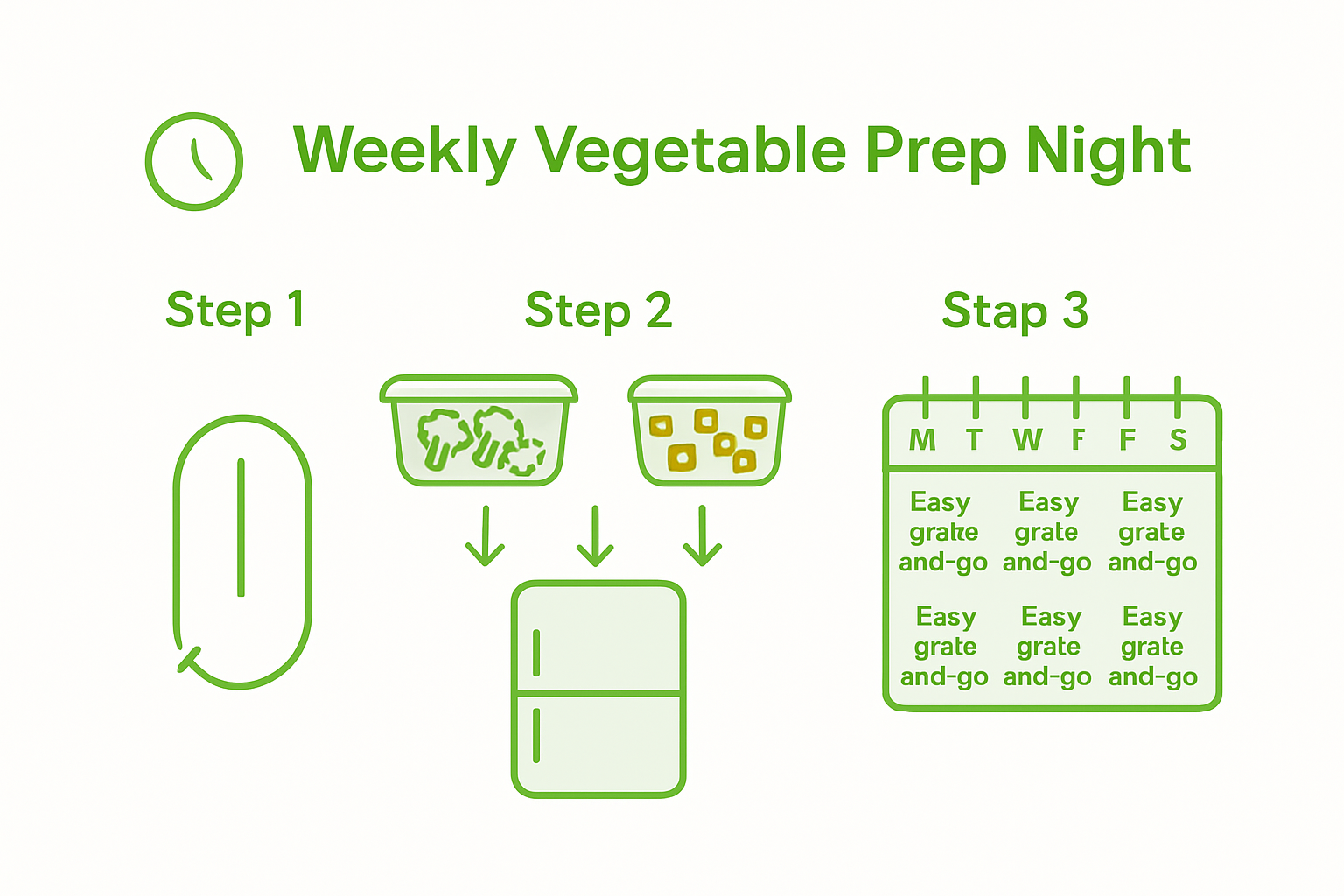
Create a vegetable prep system that works with your lifestyle. Invest in quality storage containers with compartments to separate different vegetables. Consider freezing extra portions of chopped vegetables for future use. Roast large batches of vegetables like sweet potatoes, Brussels sprouts, and cauliflower during your prep session to have ready protein and salad toppers. Label containers with dates and contents to track freshness and reduce food waste.
Pro tip: Keep a small cutting board and sharp knife permanently in an easily accessible kitchen location. This simple setup reduces friction and makes spontaneous vegetable preparation more likely, turning healthy eating from a chore into a convenient habit.
Step 5: Track Progress and Adjust Your Approach
Successfully increasing vegetable intake requires more than good intentions. You need a systematic approach to monitor your progress, understand your challenges, and make informed adjustments to your nutrition strategy. Tracking provides clarity and motivation on your journey toward healthier eating.
Implement food tracking strategies recommended by nutrition experts by maintaining a detailed food journal or using a digital tracking app. Document your daily vegetable consumption, noting the types and quantities of produce you eat. Pay attention to patterns like times of day when you struggle to include vegetables, which vegetables you enjoy most, and which meals feel challenging. Aim to record not just what you eat but how you feel after consuming different vegetables. This holistic approach helps you understand your dietary preferences and barriers.
Create a simple scoring system to gamify your vegetable intake. Assign points for different vegetable servings based on variety and nutritional complexity. Reward yourself for consecutive weeks of meeting your vegetable consumption goals. Be flexible and compassionate with yourself. If you miss a target one week, analyze why and develop strategies to overcome those specific obstacles. Consider creating visual representations of your progress like charts or graphs to maintain motivation and track your improvement over time.
Pro tip: Review your tracking data monthly to identify trends and celebrate your progress. Small consistent improvements compound into significant long term nutritional transformation.
Make Eating More Vegetables Easy and Enjoyable with Personalized Support
Increasing your daily vegetable intake can feel challenging when faced with tracking every meal, identifying creative swaps, or planning convenient prep sessions. This article highlights common hurdles like monitoring consumption, integrating veggies into favorite recipes, and maintaining motivation through progress tracking. If you find yourself struggling to turn these practical tips into lasting habits Dietium.com offers tailored solutions designed exactly for you.
Our Recipians app provides custom meal plans and recipe suggestions crafted to fit your preferences while boosting vegetable variety effortlessly. Use advanced tools like food and health calculators to assess your current intake and set achievable goals. Plus real-time activity tracking and expert video consultations keep you motivated every step of the way. Start transforming your relationships with vegetables today by visiting Dietium.com and take the first step toward a healthier lifestyle filled with nutritious, flavorful meals.
Frequently Asked Questions
How can I assess my current vegetable intake?
To assess your current vegetable intake, use a 24-hour dietary recall method. Keep a detailed food journal for at least three days and note the types and portions of vegetables you consume during meals and snacks.
What are some easy vegetable swaps I can make in my meals?
You can make simple vegetable swaps like using cauliflower rice instead of traditional rice or adding extra layers of spinach to sandwiches. Start by substituting at least one ingredient in your favorite recipes each week to gradually increase your vegetable intake.
How can I get more vegetables into my favorite recipes?
You can enhance your favorite recipes by adding vegetables like pureed carrots to pasta sauces or layering extra veggies in casseroles. Try integrating vegetables into one meal each week to boost your nutrient intake while maintaining the dishes you love.
What is the best way to prepare vegetables for convenience?
To prepare vegetables for convenience, dedicate time each week to wash, chop, and store them in clear containers. Consider prepping on a specific day, like Sunday, to ensure you have healthy options easily accessible throughout the week.
How should I track my progress in increasing vegetable intake?
Track your vegetable intake by maintaining a food journal or using a digital tracking app to note daily consumption. Aim to review your tracking data monthly to identify trends and motivate yourself, rewarding progress along the way.
How can I maintain motivation to eat more vegetables?
To stay motivated, create a scoring system for your vegetable intake, assigning points for different servings. Reward yourself for consistent weeks of reaching your goals, and visualize your progress with charts to inspire continued effort.
Recommended
- 7 Must-Know Nutrient Dense Foods List for Better Health – Dietium
- 8 Simple Salad Recipes for a Healthy Lifestyle – Dietium
- 10 Quick and Healthy Dinner Recipes for Busy Weeknights – Dietium
- Healthy and Delicious Vegan Recipes You Need to Try – Dietium
- 7 Gezonde Tussendoortjes voor Snel Afvallen – Mijn Voedsel Intolerantie Test


