 Skip to content

Over 60 percent of American adults track their fitness progress, yet many struggle to measure their results with accuracy. Staying motivated on a fitness journey depends on more than stepping onto a scale. Learning to record and analyze your body measurements can reveal meaningful changes that scales often hide. Get practical steps and easy-to-follow tips to help you gather tools, choose the right metrics, and truly understand your transformation.
Table of Contents
- Step 1: Gather Essential Tools For Measurement
- Step 2: Select Key Body Metrics To Track
- Step 3: Record Initial Body Measurements Accurately
- Step 4: Schedule Consistent Tracking Sessions
- Step 5: Analyze Progress And Adjust Goals
Quick Summary
| Key Insight | Explanation |
|---|---|
| 1. Use Accurate Measurement Tools | A flexible measuring tape and a reliable digital scale are essential for precise tracking of your body metrics. |
| 2. Track Core Body Metrics | Focus on key measurements like lean muscle mass and body fat percentage for comprehensive insights into your fitness. |
| 3. Record Initial Measurements | Take baseline measurements carefully to provide a solid foundation for future tracking and progress assessments. |
| 4. Schedule Regular Tracking | Consistency is key; aim to measure your metrics every 4 to 6 weeks for meaningful insights. |
| 5. Analyze and Adjust Goals | Regularly review your data to identify trends and make necessary adjustments to your fitness plan. |
Step 1: Gather Essential Tools for Measurement
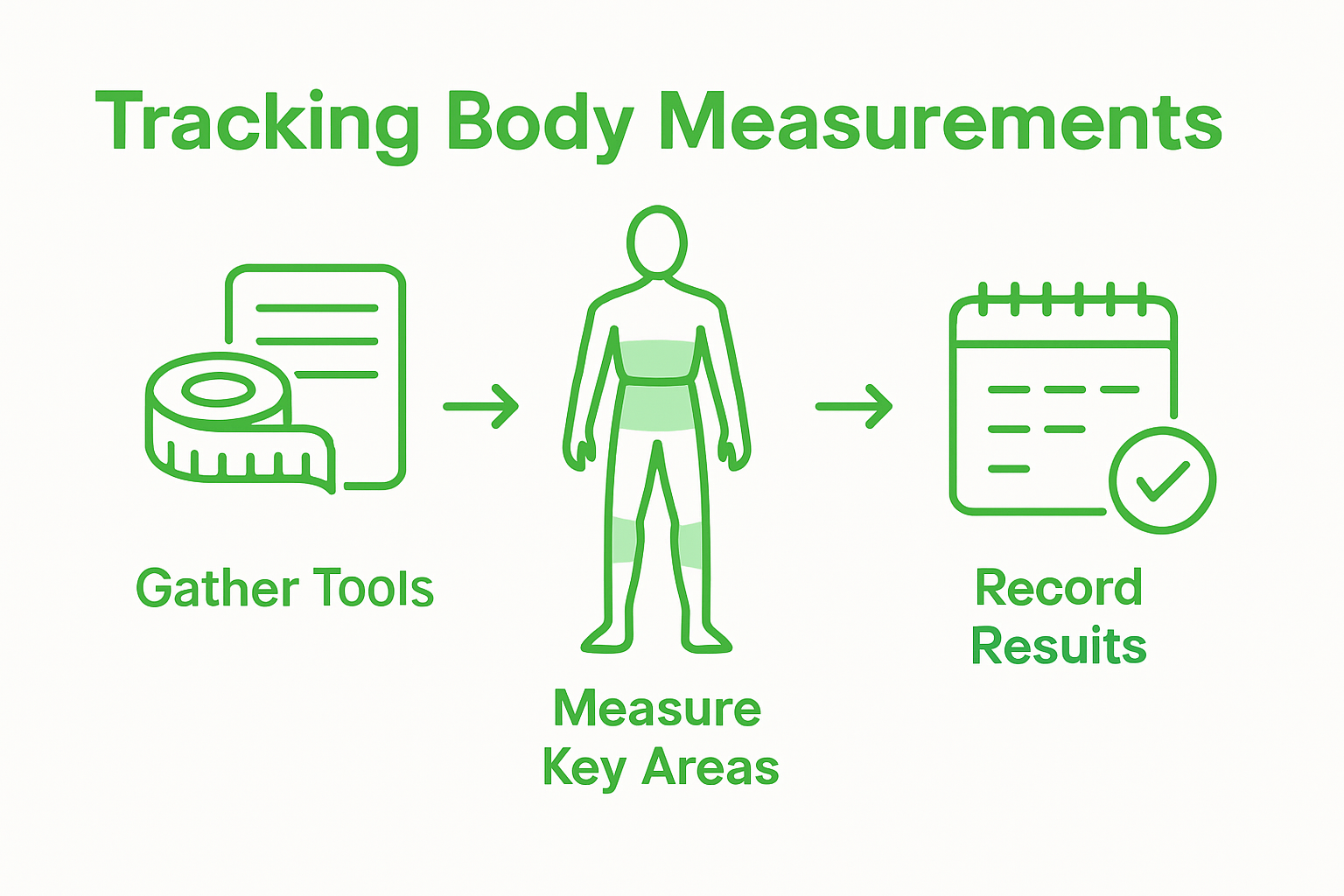
Tracking your body measurements requires precision and the right equipment. When you want to monitor fitness progress, having accurate measurement tools becomes your first critical step toward understanding your body’s transformation. You will need a few key items that transform random guesswork into scientific tracking.
Start by collecting a flexible measuring tape that allows for precise circumference measurements around key body areas like your waist, hips, chest, arms, and thighs. Choose a measuring tape made of fabric or fiberglass that remains rigid and does not stretch. Professional fitness trackers recommend using the same tape consistently to ensure measurement accuracy. Alongside your measuring tape, invest in a reliable digital scale that provides weight measurements to the nearest decimal point. Some advanced scales even offer body fat percentage and muscle mass readings.
Pro tip: Always measure yourself in the same conditions for consistent results. Take measurements first thing in the morning, before eating or drinking, and wear minimal clothing. This approach eliminates variables that could skew your tracking data. Your next step will involve learning the exact technique for taking precise body measurements, ensuring you capture accurate and repeatable data points.
Remember that consistent measurement techniques matter more than the specific tools you use. Precision comes from your method, not just expensive equipment.
Step 2: Select Key Body Metrics to Track
Successfully tracking your body transformation requires strategically selecting the right measurements that provide meaningful insights into your health and fitness journey. Not all metrics are created equal some offer far more comprehensive information about your overall physical condition than others.
Focus on core body composition metrics that reveal more than just weight. This includes lean muscle mass, body fat percentage, and visceral fat levels. These metrics go beyond simple scale numbers to provide a nuanced understanding of your body’s structural changes. Additionally, consider tracking VO2 max, which measures your body’s oxygen consumption during exercise and serves as a critical indicator of cardiovascular fitness and overall athletic performance.
Pro tip: Don’t get overwhelmed by too many metrics. Start with 3 to 5 key measurements that align with your specific fitness goals. If you are trying to build muscle, focus on lean muscle mass and body fat percentage. For cardiovascular improvement, prioritize metrics like VO2 max and resting heart rate. Your measurements should tell a story about your progress not create additional stress. Your next step will involve learning the precise techniques for capturing these metrics accurately and consistently.
Step 3: Record Initial Body Measurements Accurately
Capturing your baseline body measurements requires precision and a systematic approach. Your initial measurements serve as the critical foundation for tracking future progress and understanding your body’s transformation journey.

When taking measurements, follow precise recording techniques that ensure consistency and accuracy. Use your flexible measuring tape to record circumference measurements at key points such as your chest, waist, hips, upper arms, and thighs. Always measure at the same body landmarks each time: for instance, measure your waist at the narrowest point and your hips at the widest point of your hip bones. Reliable measurement tools like digital scales and fabric measuring tapes will help you track changes with minimal variation.
Pro tip: Create a measurement log or spreadsheet where you record each metric with the date. Take your measurements first thing in the morning before eating or drinking to minimize daily fluctuations. Wear minimal clothing or the same type of clothing each time to maintain measurement consistency. Your next step will involve understanding how to interpret these baseline measurements and set realistic fitness goals based on your initial data.
Step 4: Schedule Consistent Tracking Sessions
Establishing a reliable rhythm for monitoring your body measurements is crucial for understanding your fitness progression. Creating a structured tracking schedule transforms sporadic measurements into meaningful data that reveals your true physical transformation.
Regular monitoring of health metrics requires strategic planning and commitment. Most fitness experts recommend tracking your body measurements every 4 to 6 weeks to capture meaningful changes without becoming obsessive. Consistent fitness assessments help you identify subtle improvements that might otherwise go unnoticed. Choose a specific day and time each tracking period that fits your schedule preferably when you are well rested and have not recently exercised or consumed large meals.
Pro tip: Set calendar reminders on your phone or create a dedicated tracking journal to ensure you do not miss your scheduled measurement sessions. Consistency is more important than perfection track your measurements even if conditions are not ideal. Your next step will involve analyzing the data you collect and understanding how to interpret your body composition changes over time.
Step 5: Analyze Progress and Adjust Goals
Transforming your body measurement data into actionable insights requires a strategic and objective approach. Understanding how to interpret your tracking results will help you make informed decisions about your fitness journey and prevent frustration or misguided efforts.
Tracking fitness metrics provides critical information about your physiological changes and performance progression. Compare your current measurements against your baseline to identify trends such as muscle growth, fat reduction, or body composition shifts. Look for patterns beyond simple weight changes. Regular progress analysis helps you understand whether your current nutrition and exercise strategies are delivering the desired results or if adjustments are necessary.
Pro tip: Do not get discouraged by slow progress. Small consistent changes often lead to significant transformations. If your metrics are not moving as expected, consider consulting a fitness professional who can help you refine your approach. Your next step will involve developing a flexible mindset that views tracking as a learning process rather than a pass or fail evaluation.
Take Control of Your Fitness Journey with Precision and Support
Tracking body measurements is essential for understanding real progress but it can often feel overwhelming to manage multiple metrics like lean muscle mass, body fat percentage, and VO2 max on your own. The challenge lies in consistently recording accurate data and turning those numbers into actionable insights that keep you motivated and confident in your path. If you have struggled with creating reliable tracking routines or interpreting your baseline measurements this is the exact support system you need.
At Dietium Recipians you gain access to a comprehensive platform designed to simplify and enhance your body measurement tracking experience. With advanced AI-powered calculators and personalized meal plans tailored to your specific fitness goals you do not just track your progress you actively improve it. Our tools help you monitor critical metrics like BMI and body fat while offering expert guidance through educational blogs and real-time activity tracking. Start turning your measurements into meaningful progress today by exploring how consistent tracking and personalized nutrition come together at Dietium.com. Don’t wait until confusion or inconsistency slows you down take the first step now toward smarter, more effective fitness tracking.
Frequently Asked Questions
How do I take accurate body measurements for tracking progress?
To take accurate body measurements, use a flexible measuring tape and measure key areas such as your waist, hips, chest, arms, and thighs. Always measure at the same body landmarks and under consistent conditions, like first thing in the morning before eating.
What body metrics should I focus on for effective tracking?
Focus on core metrics like lean muscle mass, body fat percentage, and visceral fat levels for meaningful insights. Select 3 to 5 key measurements that align with your specific fitness goals to avoid overwhelming yourself.
How often should I track my body measurements?
Track your body measurements every 4 to 6 weeks to capture significant changes without becoming obsessive. Choose a specific day and time for measuring that fits within your schedule and stick to it consistently.
What is the best way to record my body measurements?
Create a measurement log or spreadsheet to systematically record all your metrics with the date. Make sure to take measurements under the same conditions each time, such as wearing minimal clothing and measuring in the morning.
How can I analyze my progress from body measurements?
To analyze your progress, compare your current measurements against your initial baseline to identify trends like muscle growth or fat reduction. Look for patterns over time to evaluate whether your current strategies are effective and adjust as necessary.
What should I do if my body measurements don’t show expected changes?
If your measurements aren’t changing as expected, don’t get discouraged. Consider reassessing your nutrition and exercise habits, and consult a fitness professional if needed to refine your approach and set realistic goals.


