 Skip to content

More than 60 million American adults choose home workouts each year, yet myths about their effectiveness still persist. Home fitness routines are more than improvised moves—they reflect smart, research-backed strategies that offer impressive benefits for anyone looking to get healthier without a gym. Discover how proven methods, supported by scientific studies, can help Americans transform their routines and overcome common misconceptions for noticeable and lasting results.
Table of Contents
- Defining Effective Home Workouts And Core Myths
- Major Types Of Home-Based Exercise Routines
- Evidence-Based Factors For Workout Success
- Tech Integration For Enhanced Results
- Safety Guidelines And Top Mistakes To Avoid
Key Takeaways
| Point | Details |
|---|---|
| Home Workouts are Effective | Home workouts can deliver significant results through structured programming and consistent execution, challenging the myth that they are inferior to gym training. |
| Core Principles Matter | Successful home workouts require understanding basic principles like progressive overload, recovery, and nutrition, transforming random exercises into effective fitness routines. |
| Technology Enhances Fitness | Integrating technological tools such as AI and smart monitoring systems can personalize and optimize home workout experiences for better results. |
| Safety is Crucial | Proper preparation and awareness of personal limitations are essential for preventing injury and ensuring sustainable fitness progress during home workouts. |
Defining Effective Home Workouts and Core Myths
Workouts performed at home represent far more than random physical movements. They are strategic, science-backed approaches to fitness that can deliver remarkable results without expensive equipment or gym memberships. Modern research increasingly validates that effective home workouts are about intelligent design, consistent execution, and understanding fundamental fitness principles.
Despite popular misconceptions, home workouts are not inherently less effective than gym training. Resistance training studies reveal numerous myths persist about home exercise capabilities. One prevalent myth suggests that bodyweight exercises cannot build significant muscle mass or strength. However, strategic progressions and targeted movements can absolutely produce impressive physiological adaptations. The University of Sydney’s research emphasizes that consistent movement matters more than perfect workout plans, challenging the notion that only specialized equipment guarantees fitness success.
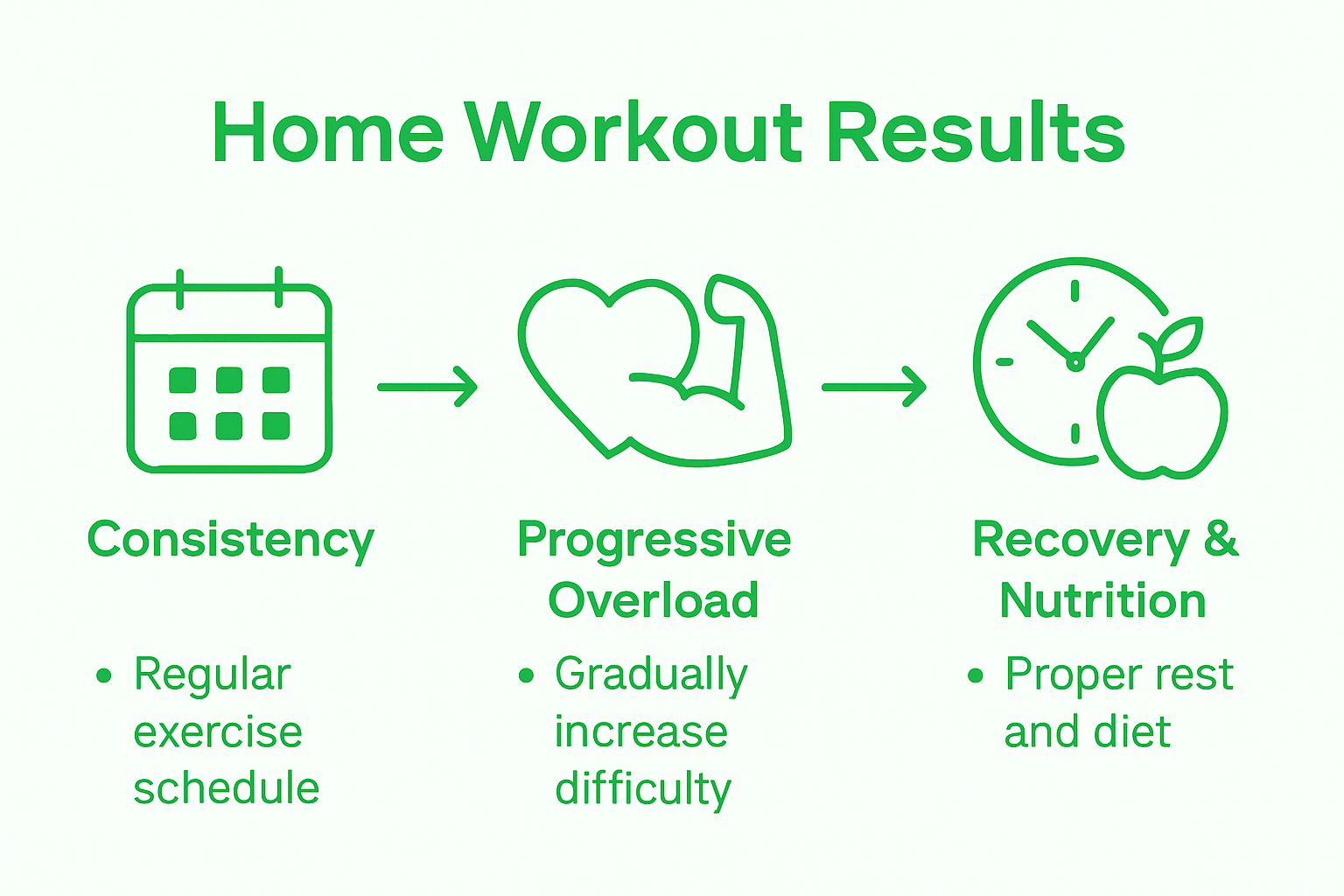
To design truly effective home workouts, individuals must understand several core principles. First, progress requires structured programming – random exercises produce random results. Second, progressive overload remains critical, whether using bodyweight, resistance bands, or minimal equipment. Third, recovery and nutrition play equally important roles in fitness transformation. By integrating targeted home workout strategies, anyone can create a comprehensive fitness approach that transcends traditional gym limitations.
Key elements of successful home workout strategies include:
- Consistent scheduling
- Progressive challenge levels
- Multimuscle group movements
- Minimal equipment requirements
- Adaptable intensity ranges
Understanding these fundamental principles transforms home workouts from random physical activities into scientifically structured fitness journeys capable of delivering remarkable personal transformation.
Major Types of Home-Based Exercise Routines
Home-based exercise routines offer diverse approaches to fitness, enabling individuals to achieve comprehensive physical conditioning without traditional gym equipment. From bodyweight training to specialized cardio techniques, modern home workouts provide flexible and effective strategies for maintaining optimal health and fitness levels.
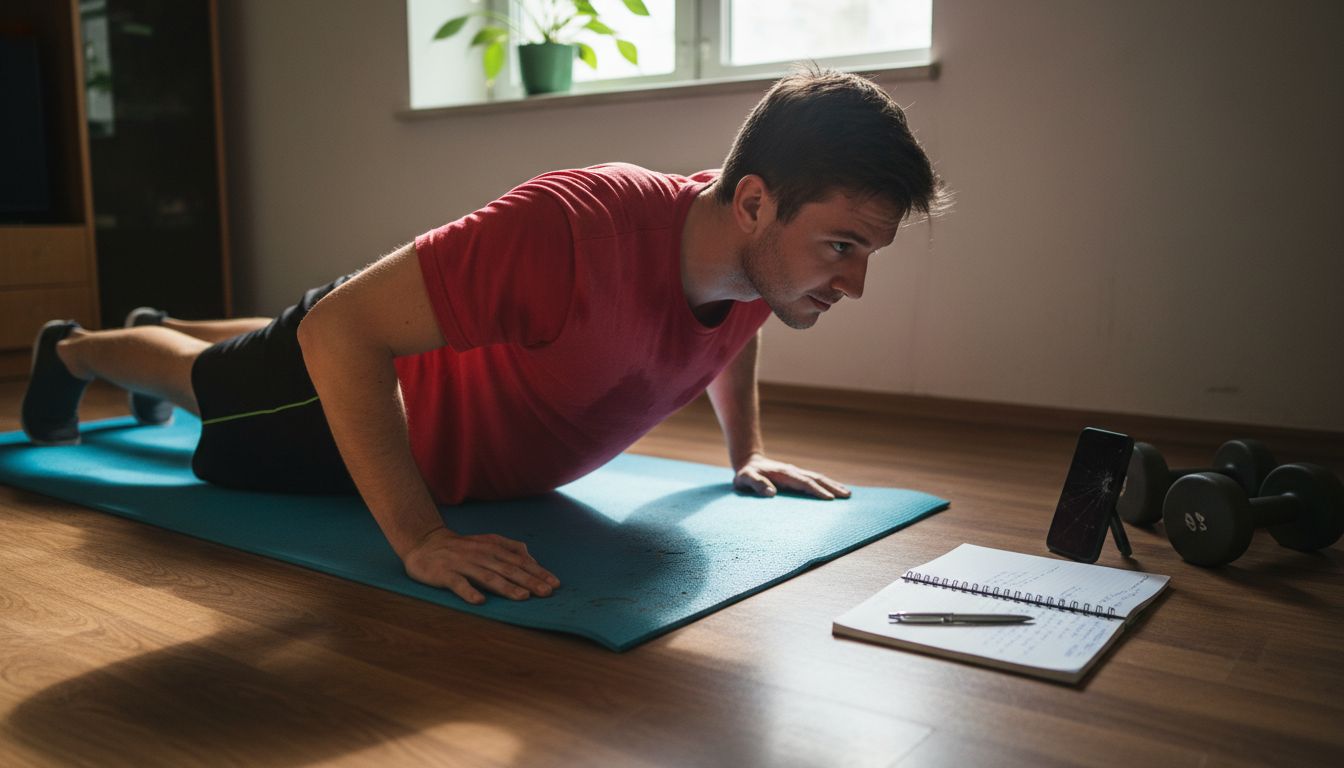
Bodyweight Training emerges as a fundamental home exercise approach, leveraging an individual’s own mass as resistance. Calisthenics represents a sophisticated form of strength training that enables practitioners to perform complex, multi-joint movements using minimal equipment. These exercises target multiple muscle groups simultaneously, promoting functional strength, improved coordination, and enhanced body control. Push-ups, squats, lunges, and planks exemplify classic bodyweight movements that can be modified to suit different fitness levels.
Cardiovascular home workouts offer another critical dimension of fitness. Step aerobics, a dynamic workout technique, allows individuals to engage in high-energy exercise using a simple platform. This method combines rhythmic movements with cardiovascular conditioning, creating an engaging and effective home fitness option. Creating consistent home workout routines becomes more achievable when individuals integrate varied exercise types that maintain motivation and challenge.
Key home workout categories include:
- Bodyweight Strength Training
- Calisthenics
- Plyometrics
- Isometric exercises
- Cardiovascular Routines
- Step aerobics
- High-intensity interval training (HIIT)
- Dance-based workouts
- Flexibility and Mobility
- Yoga
- Pilates
- Stretching sequences
Successful home fitness strategies require selecting exercise types that align with personal fitness goals, available space, and individual preferences. By understanding and implementing diverse workout approaches, individuals can create comprehensive fitness experiences that rival traditional gym training.
Evidence-Based Factors for Workout Success
Successful fitness journeys are built on more than just motivation and willpower. Scientific research provides critical insights into creating sustainable, effective workout strategies that deliver measurable results. Understanding these evidence-based principles transforms random exercise attempts into purposeful, targeted physical development.
Consistent physical activity matters substantially more than pursuing idealized workout plans. The University of Sydney’s research emphasizes that even modest levels of regular movement can significantly improve health outcomes. This counterintuitive finding challenges traditional notions that only intense, prolonged exercise produces meaningful benefits. Low-intensity, regular movement creates cumulative positive changes in physiological functioning, metabolism, and overall wellness.
Research in resistance training highlights the importance of understanding scientifically validated exercise methodologies. Nutritional supplementation, proper technique, and targeted training approaches play crucial roles in optimizing workout effectiveness. Setting realistic fitness goals becomes a fundamental strategy for long-term success, allowing individuals to build sustainable habits that progressively improve physical capabilities.
Key evidence-based workout success factors include:
- Consistency over intensity
- Regular moderate activity
- Sustainable exercise patterns
- Scientifically informed approaches
- Proper exercise technique
- Understanding physiological responses
- Nutrition-exercise integration
- Progressive goal setting
- Measurable objectives
- Adaptable workout strategies
- Incremental challenge progression
Ultimately, successful home workouts blend scientific understanding, personal commitment, and strategic planning. By embracing evidence-based principles, individuals can design fitness routines that are both effective and enjoyable, transforming exercise from a sporadic activity into a sustainable lifestyle choice.
Tech Integration for Enhanced Results
Technology is revolutionizing home fitness, transforming traditional workout approaches into sophisticated, personalized training experiences. Modern digital tools enable individuals to track, analyze, and optimize their fitness journey with unprecedented precision and insight, bridging the gap between professional guidance and individual effort.
Artificial intelligence technologies are dramatically reshaping exercise planning by enabling hyper-personalized workout strategies. Emerging research demonstrates how large language models can interpret individual fitness constraints and preferences, generating tailored weekly exercise plans that adapt to unique user requirements. This breakthrough allows individuals to receive customized workout recommendations without traditional personal training limitations, making professional-level fitness guidance accessible from home.
Smart acoustic monitoring systems represent another groundbreaking technological advancement in home fitness. By leveraging deep learning algorithms and smart speaker technologies, these innovative platforms can classify exercises, provide real-time feedback, and track physical performance with remarkable accuracy. Setting comprehensive fitness goals becomes dramatically more effective when combined with these intelligent monitoring technologies that offer nuanced, data-driven insights.
Key technological integration strategies include:
- AI-Powered Planning
- Personalized workout generation
- Adaptive exercise recommendations
- Constraint-based planning
- Smart Monitoring Technologies
- Acoustic exercise tracking
- Performance classification
- Real-time feedback mechanisms
- Data-Driven Fitness Optimization
- Precise performance metrics
- Continuous improvement tracking
- Individualized progression strategies
The future of home fitness lies at the intersection of human potential and technological innovation. By embracing these advanced digital tools, individuals can transform their workout experiences, achieving more targeted, efficient, and scientifically optimized fitness outcomes.
Safety Guidelines and Top Mistakes to Avoid
Home workouts demand careful attention to technique, progression, and personal physical limitations. Understanding potential risks and implementing strategic safety protocols transforms exercise from a potential hazard into an empowering health enhancement strategy. Proper preparation prevents injury and ensures sustainable fitness development.
Exercise experts consistently emphasize that workout effectiveness is not about punishing intensity, but intelligent, consistent movement. Contrary to popular belief, shorter, well-executed exercise sessions provide more significant health benefits than prolonged, improperly performed routines. This approach requires understanding individual physical capabilities, recognizing personal limitations, and progressively challenging oneself without compromising safety.
Food safety principles extend metaphorically to workout safety, requiring meticulous preparation and awareness. Critical mistakes often stem from three primary areas: improper warm-up techniques, ignoring body signals, and pushing beyond reasonable physical thresholds. Successful home workout practitioners develop keen body awareness, understanding the difference between productive muscle engagement and potential injury-inducing strain.
Key safety considerations include:
- Pre-Workout Preparation
- Comprehensive warm-up routines
- Proper stretching techniques
- Equipment safety checks
- Physical Awareness
- Recognizing pain versus muscle fatigue
- Monitoring heart rate
- Understanding personal physical limits
- Technique Mastery
- Correct form prioritization
- Gradual progression strategies
- Movement precision
Ultimately, home workout safety is a holistic approach combining physical preparedness, mental awareness, and intelligent progression. By respecting personal boundaries and maintaining disciplined, thoughtful exercise practices, individuals can create sustainable fitness journeys that minimize risk and maximize potential.
Unlock the Full Potential of Your Home Workouts with Personalized Fitness and Nutrition
The article highlights common challenges such as maintaining consistent progress, applying progressive overload, and balancing recovery and nutrition for effective home workouts. If you have struggled with designing structured routines or wonder how to integrate scientifically backed strategies without expensive gym equipment you are not alone. Many fitness enthusiasts find that intelligent programming and tailored guidance make all the difference in turning random exercises into results-driven fitness journeys.
Dietium.com offers a comprehensive solution to overcome these hurdles by combining advanced AI-powered tools and personalized meal and fitness plans. Through our Recipians app, you can access customized workout routines and nutrition strategies designed to align perfectly with your unique goals and lifestyle. Harness technology to track your progress and receive expert-backed advice, ensuring you build strength, endurance, and mobility effectively and safely.
Start transforming your home workouts today with a data-driven approach that makes consistency and smart planning simple. Don’t wait to unlock smarter fitness and nutrition strategies that empower lasting change. Explore how custom meal plans and fitness routines can elevate your home training and fuel your success now.
Frequently Asked Questions
What are effective home workouts?
Effective home workouts are strategic, science-backed exercise routines designed to achieve fitness results without requiring expensive equipment or gym memberships. They focus on intelligent programming, consistency, and foundational fitness principles.
Can bodyweight exercises build muscle like gym workouts?
Yes, bodyweight exercises can effectively build muscle and strength through strategic progressions and targeted movements. Research shows that consistent, structured bodyweight training can lead to impressive physiological adaptations.
What principles should I follow for successful home workouts?
Key principles for successful home workouts include structured programming, progressive overload, effective recovery, and proper nutrition. Additionally, consistent scheduling and varied exercises help maintain motivation and results.
How can technology enhance my home workout experience?
Technology can enhance home workouts through AI-powered planning tools that generate personalized exercise routines and smart monitoring systems that provide real-time feedback. These innovations help optimize workout effectiveness and track progress accurately.


