 Skip to content

Silent Sleep Apnea: The Hidden Dangers of Apnea Without Snoring
At night, you fall asleep and drown in your mattress, hoping that one day you will have the deep, calm sleep that the body has been yearning to get during the day. The room is quite silent and dark and seemingly calm. But the morning arrives, and you wake up on the impression that you have slept but a little, worn, hazy, and miserable, and your mind is not able to concentrate. Your partner is informing you that you never snore, so the common symptom of sleep apnea is not present.
But what comes of the problem when it is left under the carpet, sabotaging your evenings? It is the evil what anaesthetic sleep apnea or apnea non snoring. This is unlike the normal sleep apnea, when loud snoring is utilised as the wake-up call; this sinister kind of the disorder does not present you with the fact, and it monitors the sleep pattern of your body and blocks the supply of oxygen, which is very crucial to your body, without your awareness.
Your brain is being jolted open once more and once more to get breathing going once more, your heart is overworking to keep pace, that it is denying your body the deep restful periods of sleep with which it must make ties, and the spirit is renewed. This unacknowledged disturbance, in the long term, can be so great: this may raise your blood pressure, leave you vulnerable to heart disease, skew your mental performance and leave you perpetually fatigable, when even your bedroom gives you the illusion of calm. A restful night of slumber may, literally speaking, be a struggle that is waged every night to receive the oxygen, vigo,r and overall well-being.
What Is Silent Sleep Apnea?
Silent sleep apnea is a sleeping-disordered breathing where the airflow stops or becomes shallow whilst sleeping; however, unlike conventional obstructive sleep apnea (OSA), in the former, there is generally no loud snoring.(seemore)
There are two primary forms:
- Obstructive Silent Sleep Apnea: It may be obstructed in sleep by the airways, but snoring may not be seen due to anatomical or tissue differences.
- Central Silent Sleep Apnea: This is a condition in which the brain fails to send the right signals to the breathing muscles.
Symptoms of Silent Sleep Apnea:
- Daytime fatigue
- Morning headaches
- Difficulty concentrating
- Restless sleep
- Mood change, such as irritability or anxiety.
Since apnea without snoring does not express itself, it is possible that it will take years before it is diagnosed, which can lead to worsening health conditions. (seemore)
Causes of Silent Sleep Apnea
The causes of this silent yet harmful sleeping disorder can be as many as they can be:
- Airway Anatomy: The narrowed throat passages or the enlarged tonsils may become narrowed in a more gradual fashion with small or no sound.
- Obesity: When there is weight gain near the neck, it can reduce the air passage.
- Age: The airway becomes even less toned with its muscles and becomes even more prone to collapse.
- Neurological Conditions: Central sleep apnea is a disease that is brought about by the absence of regular signals to the brain to inhale.
- Genetics: The family history may include the predetermination of snoring and silent apnea.
Signs and Symptoms: Apnea Without Snoring
Because silent sleep apnea lacks the telltale snoring, it’s crucial to recognize subtle signs.
| Symptom | Silent Sleep Apnea | Typical Sleep Apnea |
| Snoring | Rare or absent | Loud and frequent |
| Daytime fatigue | Moderate to severe | Moderate to severe |
| Morning headaches | Common | Common |
| Restless sleep | Frequent awakenings | Frequent awakenings |
| Irritability | Often present | Often present |
Even apnea without snoring , repeated interruptions in breathing cause oxygen drops that wake the brain briefly, fragmenting sleep and leaving sufferers chronically tired.
Health Risks of Untreated Silent Sleep Apnea
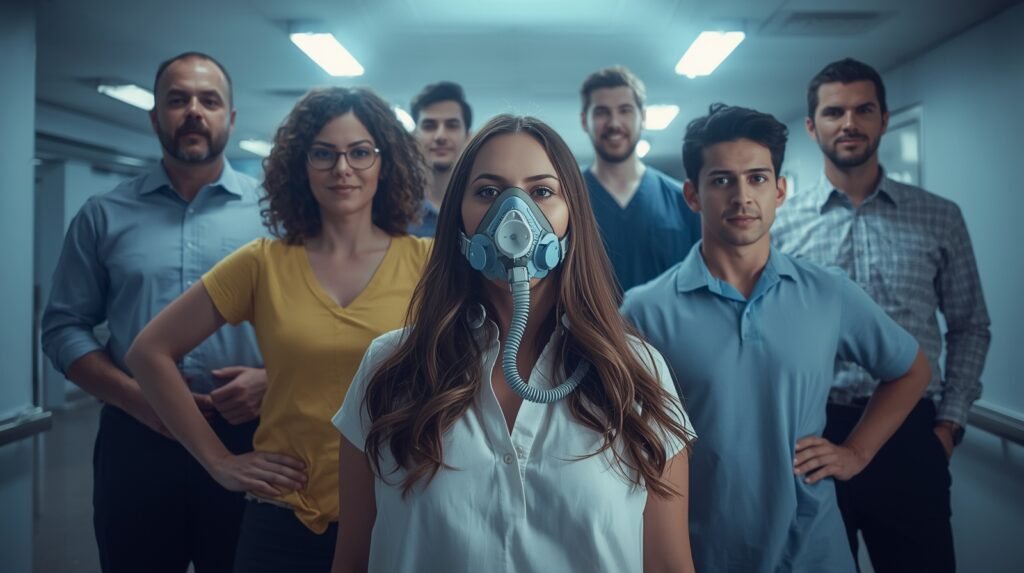
Silent sleep apnea is one of the diseases that cannot be left alone. The excessive drops of oxygen concentration in sleep (hypoxia) complicate the activity of various organs:
- Heart Disease and Hypertension: Low oxygen is chronic, thus causing the heart to labor more. Stroke Risk: The stop-and-start oxygen may increase the risk of cerebral accidents.
- Diabetes & Metabolic Problems: The sleeping disturbance affects insulin and metabolism regulation.
- Cognitive impairment: Risk of loss of memory, lack of concentration, and deterioration of learning ability.
- Mood Disorders- more common with untreated cases are anxiety, irritability, and depression. The myth about silent sleep apnea is that it is not damaging because most instances of this complication do not show up until it causes severe health problems..
How Silent Sleep Apnea Differs from Regular Sleep Apnea
| Feature | Silent Sleep Apnea | Regular Sleep Apnea |
| Snoring | Minimal or absent | Loud |
| Awareness | Often unaware | Partner notices snoring |
| Detection | Sleep studies needed | Often suspected due to snoring |
| Oxygen Drops | Same severity possible | Same severity possible |
Text Infographic Idea:
1. Airway obstructions take place in a manner that leads to the stoppage of breathing.
2. Oxygen drops -brain micro awakening.
3. Sleep cycles are fragmented
4. Daytime fatigue and health hazards are augmented.
Diagnosing Silent Sleep Apnea
Due to the lack of a snoring alarm, the diagnosis should be considered:
- Polysomnography ( Sleep Study): This is a record of the activity of the brain, oxygen, airflow, and muscle activity.
- Home Sleep Tests: It is a handheld device that is used to check oxygen and breathing.
- Clinical Presentations: apnea without snoring may present itself through the manifestations of a morning headache, daytime fatigue, and high blood pressure.
- Diagnosis is significant so as to prevent complications in the long term.
Treatments for Silent Sleep Apnea

Therapy of silent sleep apnea depends on the type of the apnea (obstructive or central), and the severity of the treatment. The objective is to realise the preservation of your airway clearance at night, to restore oxygen concentration, and to improve the quality of sleep. A more detailed analysis of treatment options is given:(seemore)
1. Lifestyle Modifications
Little daily routines can go a long way for various people, especially those with mild apnea:
Weakness: Fat around the neck and throat can lead to a contraction of the airway. Loss of weight decreases the pressure of the airway and minimises the occurrences of the instances of apnea. Sleeping on your back is also a positionof therapy that can lead to the falling of your tongue and soft tissues in your airway. Siding will most probably enable breathing and reduce the cases of non-snoring apnea.
Limitations of alcohol and tranquilizers: These medications will relax the throat muscles and, therefore, have an increased chance of creating an airway blockage. They can be avoided before going to bed, and this will vastly improve breathing during sleep. The quality of sleep, energy, and health situation can change considerably and thus be changed with the help of simple lifestyle changes.
2. Continuous Positive Airway Pressure (CPAP)
Moderate and severe cases. The initial therapy for moderate to severe cases is CPAP therapy:
- maintains the airways: CPAP machine supplies a steady stream of air through a mask, and this prevents the airways from being closed as one sleeps.
- Oxygenates the body: CPAP enables the oxygen level to be normal, which enables your body to sleep in a restorative manner that is required.
- More frequent or improved sleep: most patients have reported an increase in the quality of their sleep with frequent use of CPAP, as they feel fresh, alert, and less tired during the day.
Though CPAP therapy might be initially cumbersome, when well fitted with the mask and used on a regular basis, the therapy may have a remarkable impact on sleep and long-term health. (seemore)
Conclusion:
Silent sleep apnea is not noisy though, the result is not noisy. Unconsciously, your body may be losing a battle to get oxygen, giving your heart more than it can comfortably give and merely depleting your energy reservoirs at night, when you are lying in supposedly quiet sleep. You might be tired the whole day, you might have a headache in the morning, you may have some slight loss of memory, and even mood swings, but you will only remember it all started when you lose the ability to realize at the moment of airway blockage.
When you wake up at the end of your tether, groggy or with a clouded mind, although you have been spending enough hours in bed you know that something is amiss. Do not blame it on the stress, old age, and the hectic schedule.
Silent sleep apnea does not cause loud snoring, but the consequence is silent, and it accumulates night after night. The minor inconveniences at night would be prevented and turned into chronic diseases when you track your symptoms, visit to a professional, and an early intervention. You need to think of your sleep as the backbone of your health – the 1 on which you find your energy, focus,and health overall.
It is not only a question of acquiring more sleep in your bed than today, but you can save the years of the silent mutilation that can be inflicted on your heart, brain, and metabolism. Any small step that you perform, whether it is by improving the hygiene of your sleep, visiting a sleep laboratory, or applying the measures recommended by an expert, is the one that is going to restore your energy. Dr. Carter is advising that the most strident of health threats can be the most minimal disruptions of sleep.
Silent sleep apnea is a matter that ought to be taken into consideration before talking about severe complications. I call it having a time bomb planted in your body; you do not even know it is there, but it can alter your life drastically. Only do you think you would feel better to wake up and be truly fresh and not feel that haze of fatigue hovering over your mornings? Suppose you are of quick head, steadfast heart, and body good to get about the day.
She is the prize of curing silent sleep apnea, to breathe without blockage during the night, to supply all the cells with oxygen, to have your body feed as nature has intended. Breathe easy. Sleep deeply. Be practical – the silent sleep apnea is a silent type of sleeping but the consequences of the same are so enormous that they reverberate in all spheres of your life. You have made a decision today that can transform, not only your nights, but also your days, your health, and your future.


