 Skip to content

More than 88 million american adults already show signs of poor metabolic health, yet most people have never heard the term. Managing how the body transforms and uses energy affects everything from daily energy levels to long-term disease risks. Understanding the basics of metabolic health gives you the tools to make smarter choices and protect your well-being for years to come.
Table of Contents
- Defining Metabolic Health And Core Concepts
- Major Markers Of Metabolic Health
- Factors That Influence Metabolic Health
- Risks Of Poor Metabolic Health
- Improving And Maintaining Metabolic Health
Key Takeaways
| Point | Details |
|---|---|
| Understanding Metabolic Health | Metabolic health involves the body’s ability to effectively manage energy production and utilization, influenced by diet, physical activity, and sleep quality. |
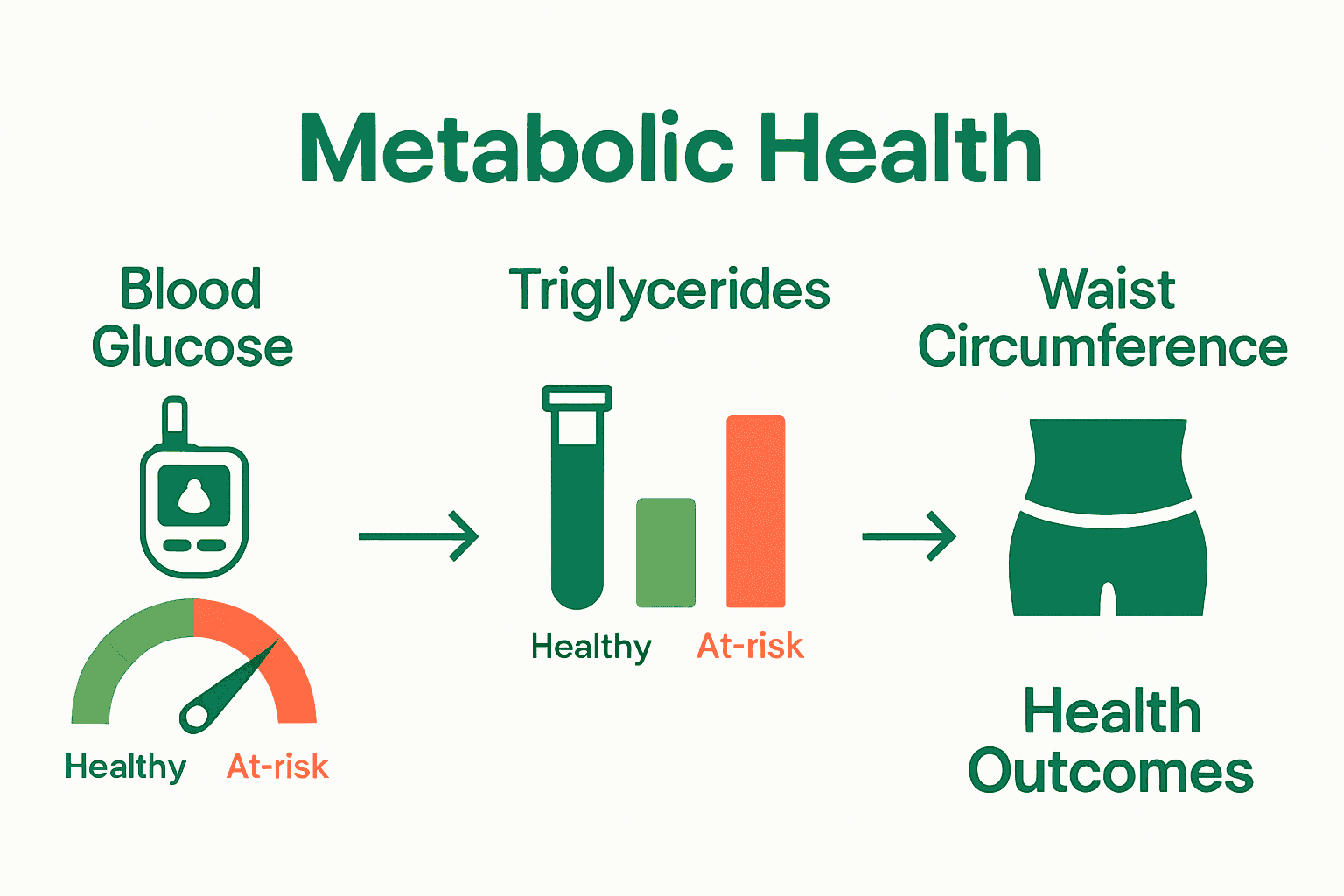
| Key Markers of Health | Important indicators include blood glucose levels, triglyceride concentrations, and waist circumference, which provide insights into overall metabolic function and disease risk. |
| Influencing Factors | Several factors impact metabolic health, including nutrition, stress management, and genetic predispositions, emphasizing a holistic approach to wellness. |
| Risks of Poor Health | Poor metabolic health can lead to serious conditions, such as type 2 diabetes and cardiovascular disease, highlighting the necessity of regular health monitoring and lifestyle modifications. |
Defining Metabolic Health and Core Concepts
Metabolic health represents the body’s ability to manage energy production, utilization, and regulation effectively. According to Immunometabolism, metabolism involves complex interactions between various physiological systems, particularly influencing immune cell function and metabolic pathways.
Metabolic processes are fundamental to understanding how our bodies transform nutrients into energy, maintain cellular functions, and support overall physiological performance. The Dynamic Energy Budget Theory provides a comprehensive framework for comprehending these intricate energy exchanges across living systems, demonstrating how organisms acquire, store, and utilize energy through interconnected biological mechanisms.
At its core, metabolic health encompasses several critical components:

- Efficient glucose regulation
- Balanced insulin sensitivity
- Healthy lipid metabolism
- Optimal mitochondrial function
- Effective energy conversion and storage
Understanding metabolic health goes beyond simple weight management. It involves a holistic approach to monitoring how your body processes nutrients, converts them into usable energy, and maintains balanced physiological responses. For those seeking to dive deeper into related concepts, check out our guide on understanding metabolism for more comprehensive insights into your body’s intricate energy systems.
Major Markers of Metabolic Health
Metabolic health is assessed through multiple key physiological markers that provide insights into overall bodily function and potential health risks. BMC Medicine research highlights specific molecular indicators like amino acid levels (valine, isoleucine) and phosphatidylcholines that can signal metabolic variations and potential disease risks.
Crucial markers for evaluating metabolic health include:
- Blood Glucose Levels: Indicates insulin sensitivity
- Triglyceride Concentrations: Reflects lipid metabolism
- Blood Pressure: Measures cardiovascular system efficiency
- Waist Circumference: Indicates potential metabolic syndrome risk
- HDL and LDL Cholesterol Ratios: Assesses cardiovascular health
Interestingly, PubMed research suggests that gut microbiome diversity can serve as an innovative marker of metabolic health, demonstrating how complex internal ecosystems influence overall physiological function. These microbiome characteristics can provide insights into insulin resistance and inflammatory markers like C-reactive protein.
For individuals seeking a comprehensive understanding of their body’s composition and potential metabolic indicators, our body composition analysis guide offers detailed strategies for tracking and interpreting these crucial health metrics.
Factors That Influence Metabolic Health
Diet stands as a fundamental driver of metabolic health, with substantial research demonstrating its profound impact. BMC Medicine highlights how specific dietary patterns, particularly the Mediterranean diet, significantly influence glucose metabolism through key metabolites like apolipoprotein A1 and docosahexaenoic acid.
Multiple critical factors interact to shape metabolic health:
- Nutrition: Quality and composition of daily food intake
- Physical Activity: Regular exercise and movement patterns
- Stress Levels: Psychological and physiological stress management
- Sleep Quality: Duration and depth of nightly rest
- Genetic Predispositions: Inherited metabolic characteristics
- Hormonal Balance: Insulin, cortisol, and thyroid hormone regulation
Interestingly, PubMed research underscores how metabolic pathways are intrinsically linked to broader health outcomes, revealing complex interactions between metabolic processes and overall physiological function. These pathways demonstrate that metabolic health is not just about individual markers, but a dynamic, interconnected system.
For individuals looking to understand and optimize their metabolic age and potential lifestyle interventions, our guide on understanding metabolic age offers comprehensive insights into how these various factors interact and influence long-term health trajectories.
Risks of Poor Metabolic Health
Poor metabolic health can trigger a cascade of serious health complications that extend far beyond simple weight management. PubMed research reveals critical insights into how metabolic dysfunction contributes to chronic conditions, highlighting the complex interplay between metabolic markers and disease development, particularly focusing on branched-chain amino acids and adipokines as key indicators of potential health risks.
The most significant risks associated with compromised metabolic health include:
- Type 2 Diabetes: Insulin resistance and impaired glucose metabolism
- Cardiovascular Disease: Higher risk of heart attacks and stroke
- Obesity-Related Complications: Increased inflammation and metabolic syndrome
- Hormonal Imbalances: Disrupted endocrine system functioning
- Chronic Inflammation: Systemic inflammatory responses
- Reduced Immune Function: Weakened body defense mechanisms
Furthermore, PubMed research underscores the intricate connection between gut microbiome diversity and metabolic health, demonstrating that reduced microbiome diversity directly correlates with increased metabolic disease risks. This research highlights how internal biological ecosystems play a crucial role in maintaining overall metabolic wellness.
Individuals seeking to understand and mitigate these potential health risks can benefit from our guide on understanding prediabetes and insulin resistance, which offers comprehensive strategies for prevention and management.
Improving and Maintaining Metabolic Health
BMC Medicine research reveals that targeted dietary interventions can significantly enhance metabolic health, with the Mediterranean diet emerging as a powerful strategy. Specific metabolites like apolipoprotein A1 and docosahexaenoic acid play crucial roles in regulating glucose metabolism, demonstrating how strategic nutritional choices can directly impact physiological functioning.
Key strategies for improving metabolic health include:
- Balanced Nutrition: Emphasize whole foods and nutrient-dense meals
- Regular Physical Activity: Aim for 150 minutes of moderate exercise weekly
- Stress Management: Practice mindfulness and relaxation techniques
- Quality Sleep: Maintain consistent 7-9 hour sleep schedules
- Hydration: Drink adequate water throughout the day
- Regular Health Screenings: Monitor key metabolic markers
PubMed research highlights the critical role of gut microbiome diversity in metabolic wellness, showing that targeted dietary approaches can lower insulin resistance and reduce inflammatory markers. This underscores the importance of a holistic approach to metabolic health that goes beyond simple dietary restrictions.
For individuals seeking structured guidance on implementing these lifestyle changes, our comprehensive lifestyle changes guide offers practical strategies for sustainable metabolic health improvement.
Take Control of Your Metabolic Health with Personalized Support
Struggling to balance blood sugar, manage stress, or maintain healthy energy levels can feel overwhelming. This article highlights how key factors like insulin sensitivity, gut microbiome diversity, and lifestyle choices shape your metabolic health. If you are ready to move beyond confusion and frustration, focus on targeted nutrition and fitness routines designed just for your unique needs.
Unlock the power of personalized meal plans and custom fitness guidance with the Recipians app. This AI-powered tool helps you track critical body metrics such as BMI, calorie needs, and body fat while delivering recipes and exercise plans that support healthy glucose regulation and metabolic balance. Discover how easy it can be to improve your metabolic age and reduce health risks by making data-driven decisions today.
Start your journey toward better metabolic wellness now by exploring the Recipians meal planning and fitness solutions. Taking this step today gives you the advantage of professional tools and tailored insights that make lasting change achievable. Visit Dietium.com and transform your metabolic health with personalized support.
Frequently Asked Questions
What is metabolic health?
Metabolic health refers to the body’s ability to manage energy production, utilization, and regulation efficiently, indicating how well it processes nutrients and maintains physiological balance.
What are the key markers of metabolic health?
Key markers include blood glucose levels, triglyceride concentrations, blood pressure, waist circumference, and HDL/LDL cholesterol ratios. These indicators help assess insulin sensitivity, lipid metabolism, and overall cardiovascular health.
How can diet impact metabolic health?
Diet plays a crucial role in metabolic health. Nutrient-dense meals and specific dietary patterns, like the Mediterranean diet, can improve glucose metabolism and influence metabolic markers positively.
What lifestyle changes can improve metabolic health?
To enhance metabolic health, individuals should focus on balanced nutrition, regular physical activity, effective stress management, quality sleep, hydration, and regular health screenings to monitor key metabolic markers.
Recommended
- Understanding Metabolic Age Meaning for Better Health – Dietium
- What Is Metabolism? Understanding Your Body’s Energy – Dietium
- Understanding the Different Types of Body Fat – Dietium
- Understanding What is Balanced Nutrition for Everyone – Dietium
- What Is Biohacking? Complete Overview for 2024 – Omnia Radiation Balancer
- Gut Health Explained: Foundations, Benefits, and Risks – Mom on Quack


