 Skip to content

Most american adults are surprised to learn that nearly 50 percent underestimate the role of macronutrients in daily nutrition. Paying attention only to calories often leaves important gaps in nutrient intake, making it harder to meet health and fitness goals. Macro counting gives you a clear, flexible way to understand what your body is really getting from food. This guide reveals how tracking macros can deliver better results than standard calorie tracking and helps you make choices that fit your american lifestyle.
Table of Contents
- What Macro Counting Really Means
- Different Macro Approaches Explained
- How Macro Tracking Actually Works
- Benefits and Downsides of Counting Macros
- Macro Counting Versus Other Tracking Methods
Key Takeaways
| Point | Details |
|---|---|
| Macro counting is a flexible nutrition method | It focuses on tracking macronutrients rather than just calories, allowing for better dietary goal management. |
| Different macro tracking approaches exist | Strategies can range from strict tracking to more intuitive methods, catering to individual preferences and needs. |
| Understanding nutrient quality is vital | Tracking macros allows individuals to better understand how different nutrients affect their body and overall wellness. |
| Be aware of the psychological aspects | While advantageous for nutrition clarity, macro counting can lead to unhealthy relationships with food if not approached mindfully. |
What Macro Counting Really Means
Macro counting is a strategic nutrition approach that goes beyond traditional calorie tracking. According to Medical News Today, this method focuses on tracking macronutrients—proteins, carbohydrates, and fats—to manage specific dietary goals more precisely than simple calorie counting.
Unlike restrictive diets, macro counting offers a flexible nutrition strategy that allows individuals to understand and optimize their nutrient intake. Chiseled by Chels describes it as a sustainable approach that empowers people to meet their health and fitness objectives without eliminating entire food groups or imposing overly rigid dietary rules.
At its core, macro counting recognizes that not all calories are created equal. A 200-calorie protein shake will metabolize differently than a 200-calorie candy bar, even though they contain the same energy value. By tracking macronutrients, you gain insights into the nutritional quality of your food, understanding how different nutrients impact your body composition, energy levels, and overall wellness.
The primary macronutrients you’ll track include:
- Proteins: Essential for muscle repair and growth
- Carbohydrates: Primary energy source for bodily functions
- Fats: Critical for hormone production and nutrient absorption
To get started with precision macro tracking, consider using our Free Macro Calculator, which can help you determine personalized macronutrient targets based on your unique health goals and metabolic profile.
Different Macro Approaches Explained
Macro counting is not a one-size-fits-all strategy, but rather a flexible nutritional approach with multiple methodologies. According to Medical News Today, one popular method is the ‘If It Fits Your Macros’ (IIFYM) approach, which allows significant dietary flexibility as long as individuals meet their specific macronutrient targets.
Chiseled by Chels highlights that macro tracking strategies can range from highly precise to more adaptable styles. Some approaches demand meticulous tracking of every gram consumed, while others adopt a more relaxed perspective that emphasizes overall nutrient balance without strict gram-level measurement.
Typically, macro approaches can be categorized into three primary styles:
- Strict Tracking: Measuring and logging every single macronutrient consumed
- Flexible Tracking: Allowing some margin of error while maintaining general macro targets
- Intuitive Macro Monitoring: Using macro knowledge to make informed dietary choices without rigid logging
To develop a personalized macro tracking strategy that aligns with your specific health objectives, check out our guide on calculating macros to understand how individual goals influence macronutrient distribution. Whether you’re an athlete seeking muscle growth, someone managing weight, or simply aiming for optimal nutrition, there’s a macro approach designed to support your unique wellness journey.

How Macro Tracking Actually Works
Macro tracking is a systematic process of measuring and documenting nutrient intake with precision. According to Studocu, this method involves meticulously measuring portion sizes, typically using a food scale, and logging the intake of proteins, carbohydrates, and fats through specialized food-tracking applications.
Chiseled by Chels emphasizes that effective macro tracking requires consistent monitoring of daily nutrient consumption. The process involves several key steps that transform nutrition from guesswork to a data-driven approach:
- Determine Your Baseline: Calculate your personal macronutrient needs based on age, weight, activity level, and health goals
- Measure Precisely: Use digital food scales to weigh ingredients accurately
- Log Consistently: Record every food item consumed using tracking apps or journals
- Review and Adjust: Analyze your weekly macro intake and make strategic modifications
To streamline your macro tracking journey and gain deeper insights into your nutritional patterns, consider exploring our tutorial on tracking macros for optimal health. This comprehensive approach transforms nutrition from a complex challenge into a manageable, data-informed lifestyle strategy that empowers you to achieve your health and fitness objectives with remarkable precision.
Benefits and Downsides of Counting Macros
Macro counting offers a nuanced approach to nutrition that comes with both significant advantages and potential challenges. According to Medical News Today, this method can be instrumental in preventing health conditions by ensuring a balanced nutrient intake, while simultaneously presenting risks of becoming overly focused on numerical tracking.
Shape highlights the complex psychological landscape of macro tracking, emphasizing that while it provides nutritional clarity, it may trigger unhealthy relationships with food, particularly for individuals with previous eating disorder histories.
Here’s a balanced breakdown of macro counting’s pros and cons:
Benefits:
- Provides precise nutritional awareness
- Supports targeted health and fitness goals
- Encourages mindful eating
- Allows flexible dietary choices
- Helps understand individual nutritional needs
Potential Downsides:
- Can create anxiety around food
- Might lead to obsessive tracking
- Time-consuming process
- Potential for nutrient fixation
- Risk of developing disordered eating patterns
For those interested in a strategic approach to nutritional planning, explore our guide on macronutrients for weight loss, which offers comprehensive insights into creating a balanced, health-focused macro tracking strategy that prioritizes both physical and mental well-being.
Macro Counting Versus Other Tracking Methods
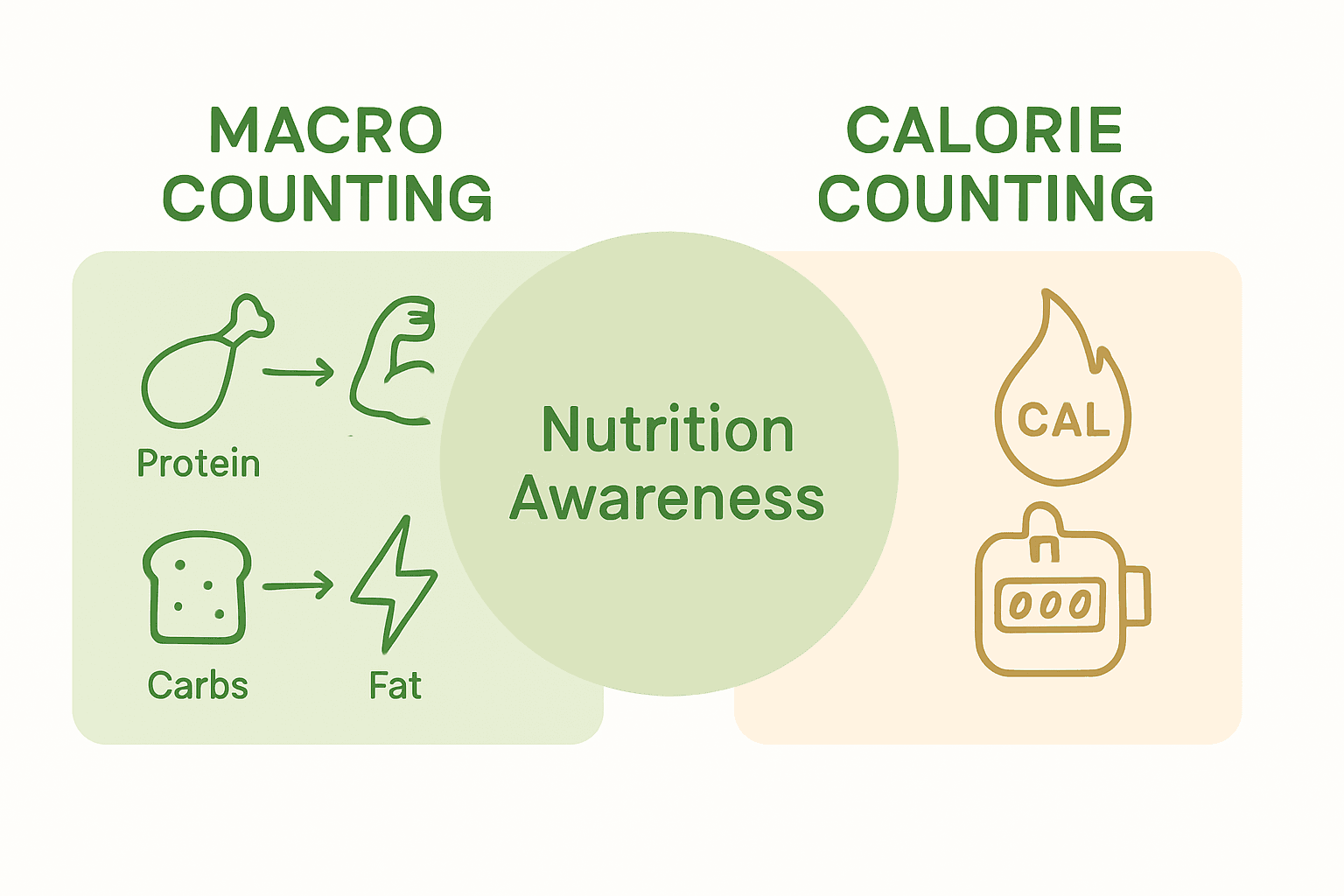
Nutrition tracking has evolved significantly, with macro counting emerging as a more sophisticated approach compared to traditional methods. According to Medical News Today, macro counting goes beyond simple calorie tracking by focusing on the precise balance of proteins, carbohydrates, and fats, offering a more comprehensive view of nutritional intake.
Chiseled by Chels emphasizes that unlike basic calorie counting, macro tracking provides a deeper understanding of nutrient quality and composition. This approach transforms nutrition from a mere numbers game to a strategic health management tool.
Here’s a comparative breakdown of different nutrition tracking methods:
| Tracking Method | Focus | Pros | Cons |
|---|---|---|---|
| Calorie Counting | Total energy intake | Simple to understand | Ignores nutrient quality |
| Macro Counting | Nutrient balance | Precise nutrition tracking | Time-consuming |
| Intuitive Eating | Hunger and fullness | Flexible | Lacks specific tracking |
| Food Group Tracking | Balanced diet categories | Easy to implement | Less precise |
To dive deeper into personalized nutrition strategies, explore our guide on macronutrients for weight loss, which offers insights into tailoring your tracking approach to meet individual health and fitness objectives.
Take Control of Your Health with Smart Macro Counting
Struggling to stay consistent with macro counting while avoiding overwhelm and obsession is a common challenge we see in the article. Balancing precise tracking, flexible approaches, and understanding your unique nutrition needs can feel complicated and time-consuming. You want clear guidance that fits your lifestyle without sacrificing progress or mental peace.
Dietium.com offers practical solutions to these exact problems. Our AI-powered tools like the Free Macro Calculator help you personalize your macronutrient targets quickly and accurately. The core Recipians app delivers custom meal plans and recipe ideas aligned with your specific macros and health goals so you can enjoy food without guilt or guesswork. Plus, with convenient features like real-time activity tracking and expert video consultations, we make sustainable macro counting hassle free.
Ready to move beyond overwhelm and start confidently managing your macros for real results? Explore the Recipians app today to take your nutrition tracking to the next level and unlock a healthier, balanced lifestyle built just for you.
Frequently Asked Questions
What is macro counting and how does it differ from calorie counting?
Macro counting focuses on tracking the intake of macronutrients—proteins, carbohydrates, and fats—rather than just total calorie intake. This method offers a more comprehensive understanding of nutritional quality and allows for more personalized dietary strategies.
How do I start counting my macros effectively?
To start counting macros, calculate your personal macronutrient needs based on your age, weight, activity level, and health goals. Then, consistently measure portion sizes using a food scale and log your intake through food-tracking apps or journals.
What are the benefits of macro counting?
Macro counting provides precise nutritional awareness, supports targeted health and fitness goals, encourages mindful eating, and allows for flexible dietary choices. It helps individuals understand their unique nutritional needs better than traditional calorie tracking.
What are some potential downsides of counting macros?
While macro counting can enhance nutritional clarity, it may create anxiety around food, lead to obsessive tracking, and be time-consuming. There is also a risk of developing disordered eating patterns, particularly for individuals with a history of eating disorders.
Recommended
- How to Track Your Macros for Optimal Health – Dietium
- How to Calculate Macros for Your Personal Health Goals – Dietium
- Free Macro Calculator for Weight Loss or Weight Gain
- Macronutrients for Weight Loss: Complete Guide – Dietium
- How Calorie Counting in Meal Planning Aids in Fat Loss? – LeanAndFit
- Understanding Macronutrients for Weight Loss Success – LeanAndFit


